
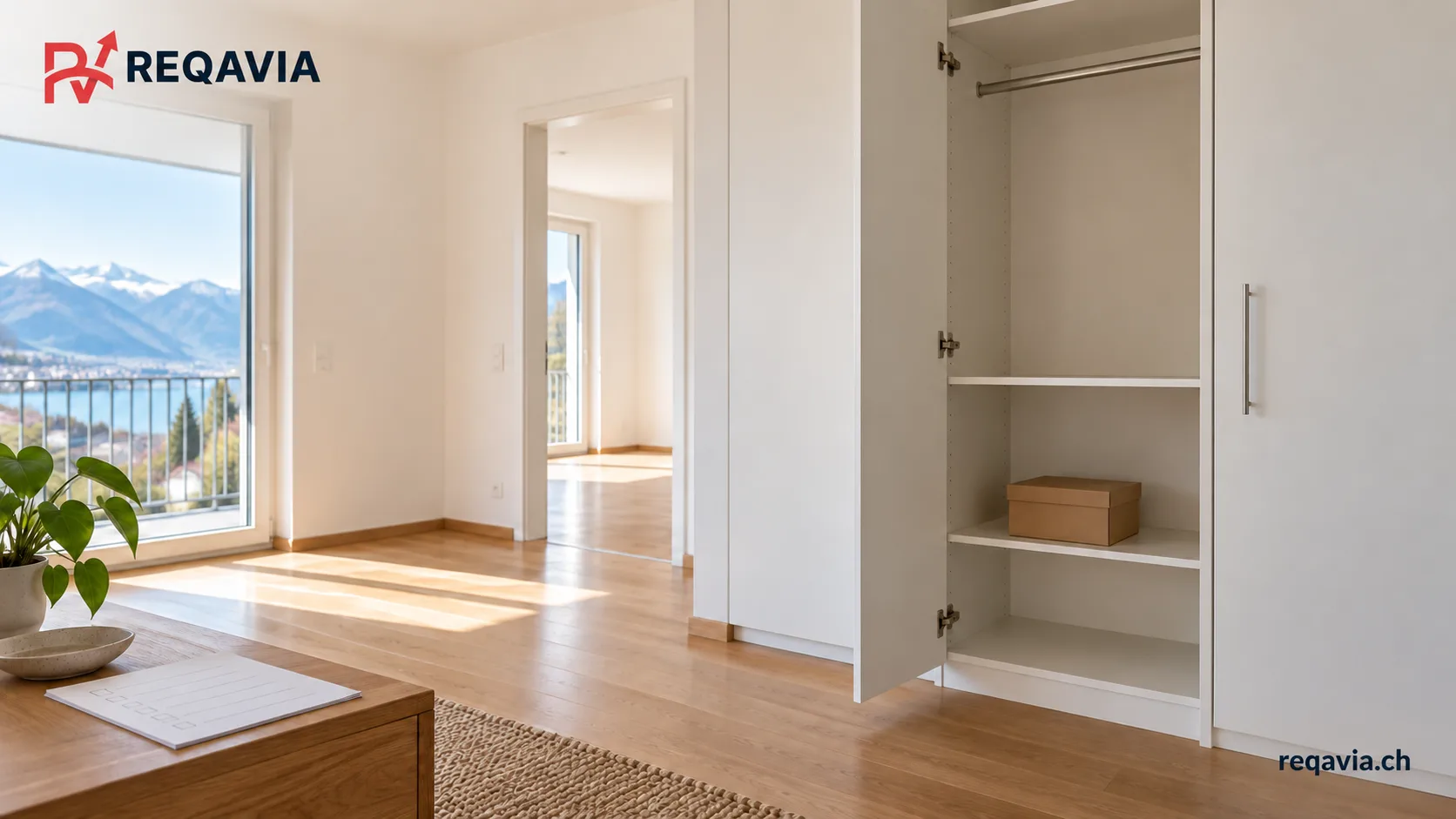
Once the large furniture has gone, make one deliberate inspection before the clearance team leaves. An almost empty room can still contain a full cupboard, a box in the cellar or fittings that must stay. Check the agreed areas against your removal list, record anything outstanding and confirm who will deal with it. Do this before handing over the keys or closing access.
Prepare the last inspection before loading starts
Keep the agreed scope and a simple room list with you. Include separate spaces only if they belong to your assignment: a cellar compartment, attic storage, balcony, garage or authorised parking space. Arrange who will inspect them, how access works and when the responsible person will be present. Do not rely on a final glance from the entrance.
Set aside keys, personal papers, medication and anything needed until departure in a bag that stays with you. Identify fixtures and items agreed to remain for the next occupant. Where ownership is uncertain, obtain clarification before anyone loads the object. A nearly empty cupboard is not proof that everything inside may be removed.
Make three distinct passes
- First check storage spaces. Open accessible drawers and cupboard doors, look into wardrobes and examine the spaces previously hidden by furniture. Check high shelves only from a safe position; arrange suitable access rather than climbing on a box or remaining chair.
- Then inspect each additional area on your list. Check your own cellar compartment, balcony storage and any agreed attic or garage area. In shared spaces, identify your belongings individually and leave other people’s property alone.
- Finally check what the work itself leaves behind: packaging, dismantled furniture parts, screws, protective materials and the bags you used for sorting. Distinguish the company’s equipment from items intended for removal.
BFU recommends a stable stepladder; chairs and boxes are unsuitable substitutes.
BFU: safe access and preparation for household cleaning (German)
Mark each inspected area as complete. If a room is inaccessible, record it as unchecked and name the person who will return. Do not tick it off simply because it is likely to be empty. Keep a clear distinction between an inspection still to do and an item found but awaiting a decision.
Deal with discoveries before expanding the job
For each remaining object, decide whether it stays, travels with you, joins the agreed removal load or needs a separate arrangement. Describe newly found items by quantity, dimensions and location. Ask the company to confirm whether the vehicle, time and agreed service can accommodate them, together with any price change, before they are loaded. Keep the agreed addition to the scope in writing. Keep electrical items and unfamiliar substances separate until an appropriate disposal route is confirmed.
Do not dismantle fixed fittings or move a heavy appliance just to inspect a hidden area. Ask the appropriate person to assess the task. If access requires technical work, establish who can carry it out before approving it.
Separate clearance from cleaning
A cleared room and a cleaned room are different results. Review the cleaning scope separately: which rooms and surfaces, inside which cupboards, what equipment remains, and when cleaning can begin. Ask who removes the final packaging after loading and who checks the result. Neither a clearance nor a cleaning request by itself guarantees acceptance at a property handover.
Before leaving, record any remaining task, its responsible person and the access arrangement. Take a few useful condition photographs if appropriate, keeping personal documents out of view. Confirm where keys go and retain the written agreement and your final list. Leave passages and exits clear after gathering tools and packaging.
Request only the remaining work you need
If you need further clearance or cleaning, describe the outstanding list in a REQAVIA text request: rooms, items, approximate dimensions, floor, lift access and deadline. Share necessary images directly and privately with the company during coordination. REQAVIA is an intermediary; the company and you agree the price, work and timing directly. A precise final list gives the company a practical basis for assessing the remaining job.