
Plan storage for extra chairs around their next use, rather than simply the number standing in the cellar. Establish how many you actually need and how that group will reach your home before an occasion. Then compare an appropriate arrangement. An inexpensive space is of limited use if the required chairs are inaccessible behind other furniture when you need them.
Start with a real occasion
Look at how many chairs were actually used during recent visits. Separate everyday seating, a group for known occasions and reserve chairs without a defined purpose. Check whether the additional models still suit the table and present room arrangement. A formerly large household may now have different needs. Write down a justified target number instead of assuming that everything currently owned will be needed again.
Decide separately which chairs to retain and which could be used elsewhere. If you intend to pass some on, confirm that the recipient genuinely accepts them in their described condition. FOEN identifies reuse and repair as ways of extending product use. That does not require indefinite storage of every seat. Your decision depends on a realistic use and the organisation required to make it possible.
Matching appearance does not establish matching condition
Give each chair a clear reference or create small, recognisable groups. Note known damage, loose areas and differences in condition. A wobbly chair should not appear on the list of immediately usable guest seats. Have an unresolved stability problem assessed before someone uses it. A shared colour is not a reason to treat all the chairs as being in the same condition.
Match seat pads and accessories to the appropriate group. Where sizes differ, “one box of cushions” is too vague for collection. Record which pads belong to which chairs and where they are stored. If you retrieve only part of the collection, the handover list should identify those chairs and accessories. After the event, you can also establish what returned to storage and what remains at home.
Establish the storage arrangement before requesting space
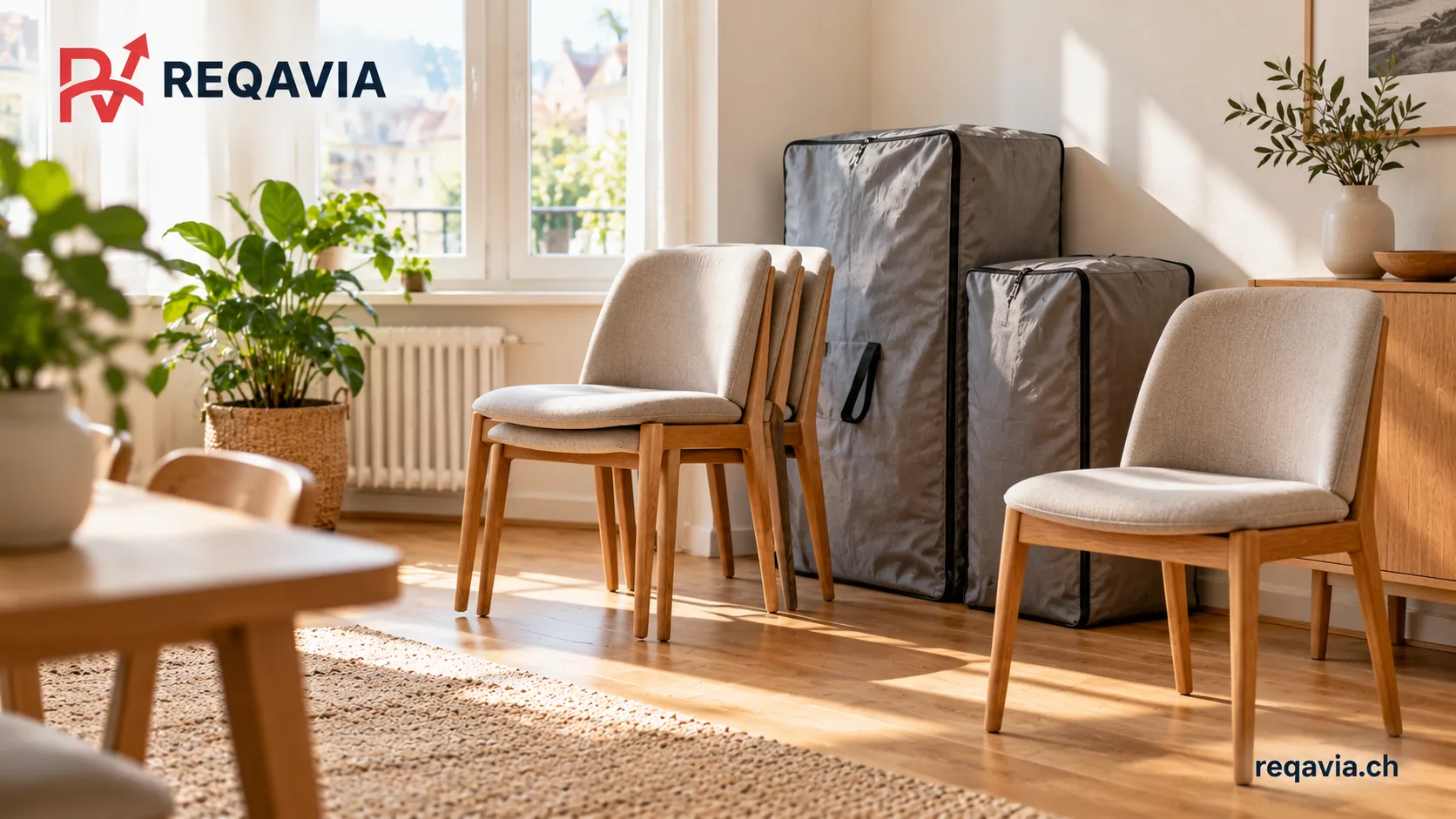
Measure the chairs in their intended storage configuration. Consult your own documents before assuming they can be stacked or folded in a particular way. Having no arms does not establish that a chair was designed for stacking. State which arrangement is confirmed and which questions still require assessment. To estimate suitable space, the company needs shapes and dimensions as well as the total quantity.
Ask what protection is appropriate and who prepares it. Arrange access to the intended groups within the layout agreed with the storage facility. An improvised pile beside the exit is not an organised collection point. If weight, shape or a defect makes a group difficult to handle, resolve the handling arrangement before the appointment rather than leaving the decision to the person who arrives to collect it.
Compare the full cycle of use
Ask the company to explain its offered services for intake, partial retrieval, return to storage and transport. Check notice requirements, access hours and who makes the chairs available. Compare the same quantity and process in each quotation. An offer covering space alone does not address the same work as repeated preparation for collection. Include your own time without assuming a universal saving from either option.
In a REQAVIA text request, describe the quantity, dimensions, condition, storage arrangement and expected occasions. Ask for a solution covering the groups you will actually need, with protection and retrieval defined. REQAVIA is an intermediary; you agree terms, prices and execution directly with the company. Photographs of the groups can be shared privately during coordination. The request form uses your description rather than image or document uploads.