
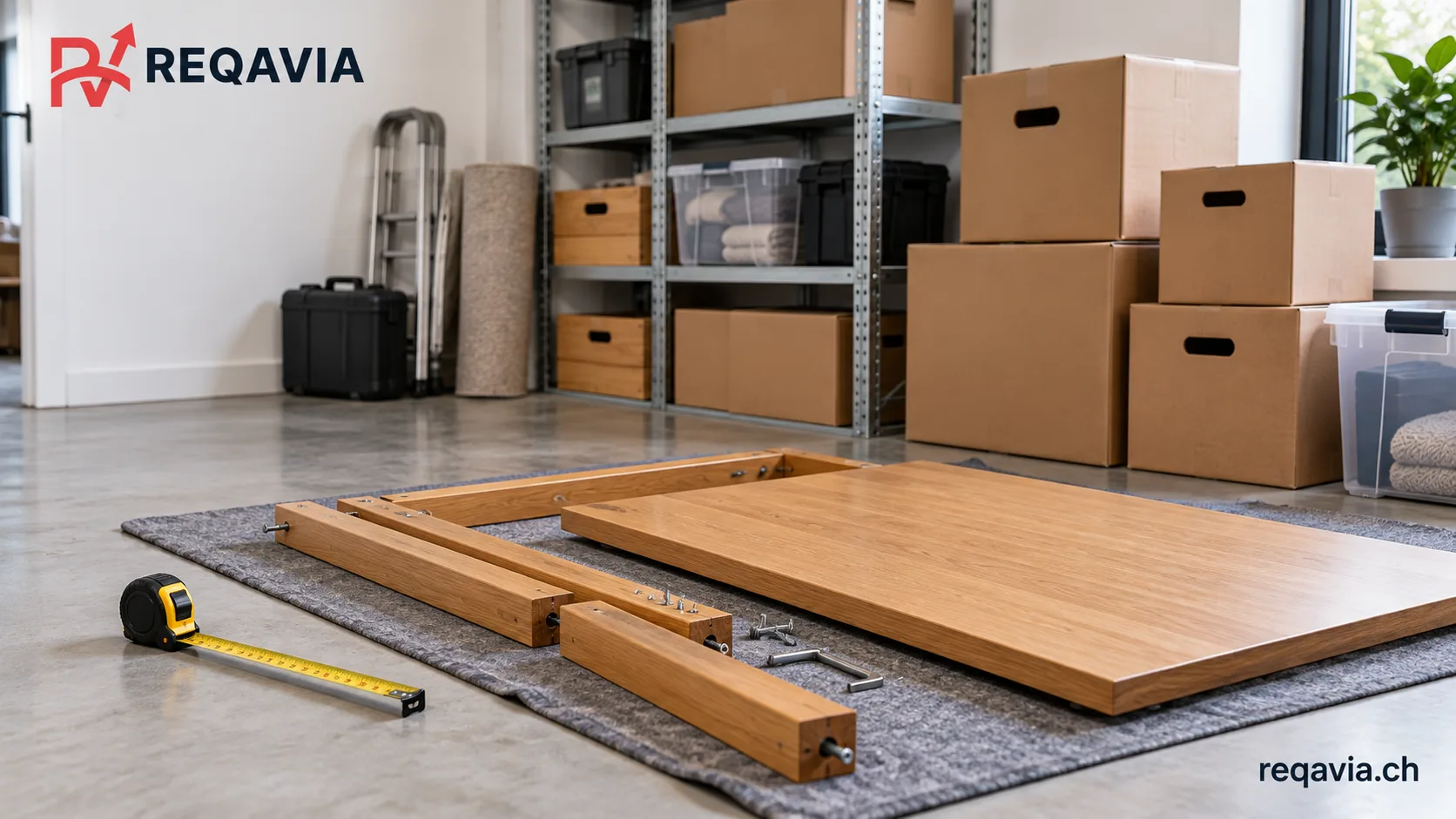
The number of rooms in your home is a poor measure of storage needs. One room may contain a heavy book collection and many boxes while another is nearly empty. Start with an actual inventory: large furniture first, then boxes by size, followed by long or fragile items that cannot be stacked. This makes a company's estimate understandable instead of relying on a supposed standard volume.
Measure what will actually go in
- Record each piece's length, width and height in a feasible storage position. A dismantled wardrobe differs from an assembled one, but dismantling requires a plan for keeping its parts and rebuilding it.
- Use consistent box sizes where the contents allow and record the expected number. Separate heavy boxes from light ones rather than treating every gap as usable space.
- Identify glass, pictures and pieces that cannot take anything on top. These restrictions can affect the arrangement more than the total volume.
- Decide what you will need during the storage period. An aisle for a box you retrieve weekly is part of the requirement, not necessarily wasted space.
Turn the calculation into a realistic arrangement
Multiplying dimensions in metres gives an approximate volume for each piece, which you can add together. That total does not guarantee a room size: shapes leave gaps, stacking heights are limited, and doors, columns and access routes matter. Send the inventory and photos to the provider and ask them to explain their assumptions. If they suggest a smaller space, ask how non-stackable items will fit.
Compare the room's shape and entrance too. A long, narrow unit may make furniture harder to remove despite having the same floor area. Ask for door dimensions, the route from the vehicle and suitable handling equipment. Do not compensate for insufficient space with heavy, unstable stacks. Planning the load and getting help when needed matter more than using every centimetre.
Before agreeing
Ask whether changing unit size is possible, when a different charge starts and what happens if the load does not fit on arrival. Discovering this after half the vehicle has been unloaded is avoidable. Keep the inventory and photos so you can update them if you add more items.
Include the dimensions of your five largest pieces, box count, storage period and visit frequency in a REQAVIA request. You can then discuss the company's proposal against a specific need and confirm the space, access and service details directly with them.