
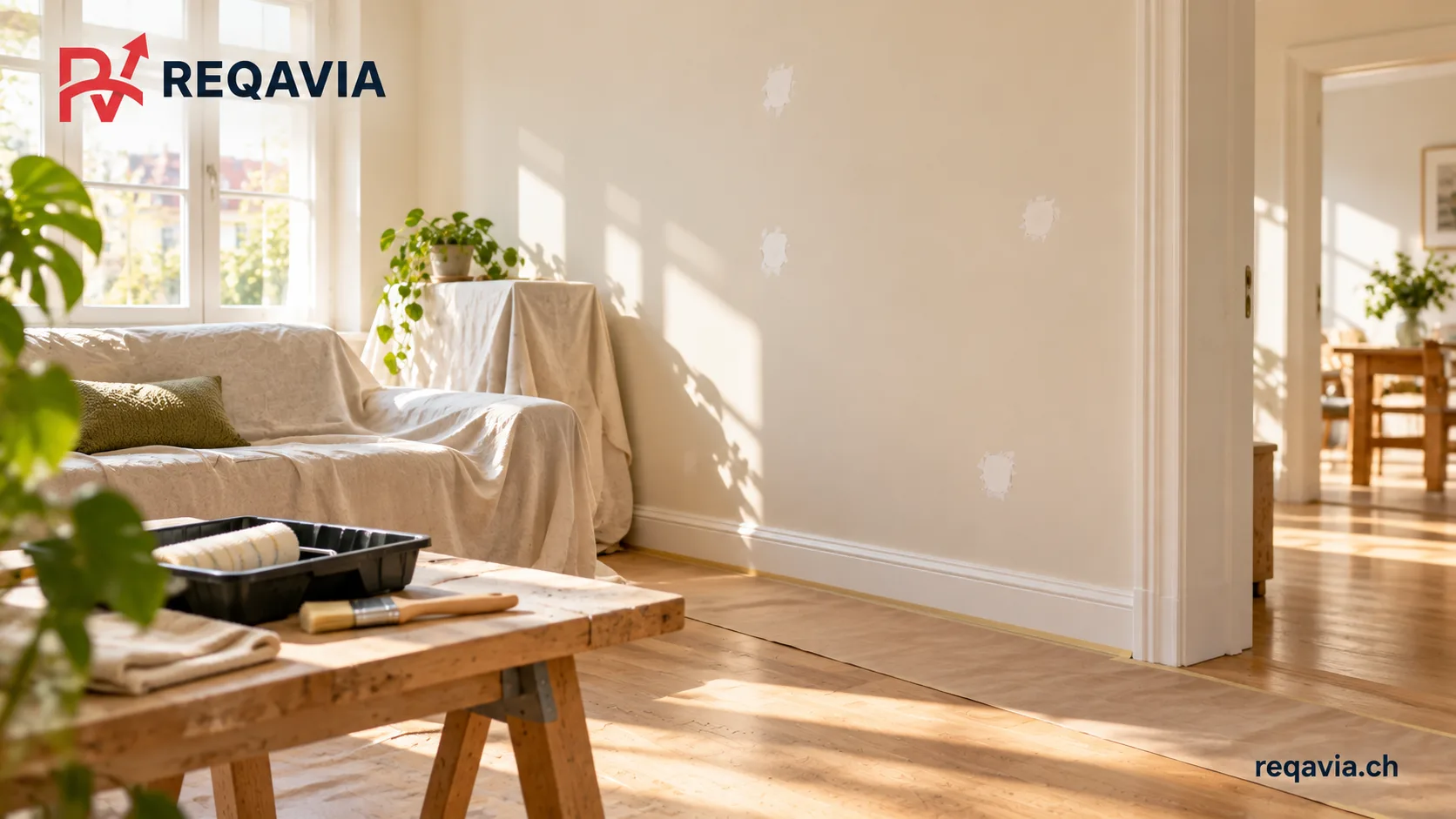
If you want to prepare a room yourself and pay a painter for the final coats, agree the handover before starting. Moving furniture is different from altering the wall surface. Ask the painter which tasks you can take on, what condition is needed afterwards and how that condition will be checked. Do not start an uncertain technical stage simply because the final painting appointment is approaching.
First decision: room preparation or surface preparation?
Write down the work you propose to do, item by item. Emptying shelves, moving agreed furniture and keeping access clear can be described separately from washing, filling, priming or removing existing layers. Listing a technical task does not mean it has been approved. Let the painter assess the wall and confirm which work, if any, is suitable for you to undertake.
Identify each wall or section and record approximate width and height, openings and areas that will remain untouched. Include existing cracks, stains, loose material or damp patches as observations. Agree who protects floors and furniture, and what protection the painter needs left in place. Do not remove sockets, fixed electrical fittings or unfamiliar attachments to make the room look ready.
Stop before disturbing unknown old layers
Suva’s guidance for painters warns that asbestos must be considered during renovation in buildings dating from before 1990, and calls for clarification before work proceeds when its presence is uncertain. A building date is a warning to assess, not a diagnosis of your wall.
Suva: asbestos awareness for painters and plasterers (German)
Do not sand, scrape or strip an unidentified old layer yourself. Tell the company what is known about the building and earlier renovations and ask who will arrange any necessary specialist assessment. If the condition or composition remains unresolved, keep that stage outside your DIY scope. Agree a revised timetable instead of hiding the uncertainty beneath a new layer.
Approve materials before buying or applying anything
For a preparation stage the painter has accepted, request a written description of the exact material, intended areas and conditions required before the next stage. Ask who supplies it and who confirms that the result is ready. Follow the agreed instructions and the relevant product information; this article is not a method for applying an unknown system.
Do not replace an agreed product with another bearing a similar description, or use an old leftover because it is available. Ask before changing the plan. Keep labels and record what was applied, where and when, including any unexpected result. This lets the painter review the actual work rather than relying on a general statement that the wall is prepared.
Book a checkpoint before the painting appointment
Arrange inspection early enough to resolve problems without assuming the final work can start immediately. Ask what the painter will check on site and how the decision to continue will be recorded. Photos can help coordination, but a short reply to photos should not be treated as approval of every surface property or concealed stage.
If something needs correction, request an explanation identifying the affected area and proposed work. Agree who will do it, the additional price if applicable and the revised date before proceeding. Keep an updated task list showing what you completed, what was checked and what remains. Avoid having two versions with different divisions of responsibility.
Compare the whole arrangement, not an assumed discount
Ask for comparable options: agreed preparation by you followed by painting, and preparation plus painting by the company. Include your supplies, any equipment, handling of waste, inspections and possible correction work in the comparison. There is no automatic saving just because you have spent time on the wall. Choose tasks that you can complete safely and that the painter accepts as useful preparation.
Describe this division in a text-based REQAVIA painting request, giving room and wall dimensions, known condition, proposed tasks and dates. Share relevant photos directly and privately with the company during coordination. REQAVIA is an intermediary; you agree the scope, inspection, price and execution directly with the company. Request a clear handover point before undertaking surface work.