
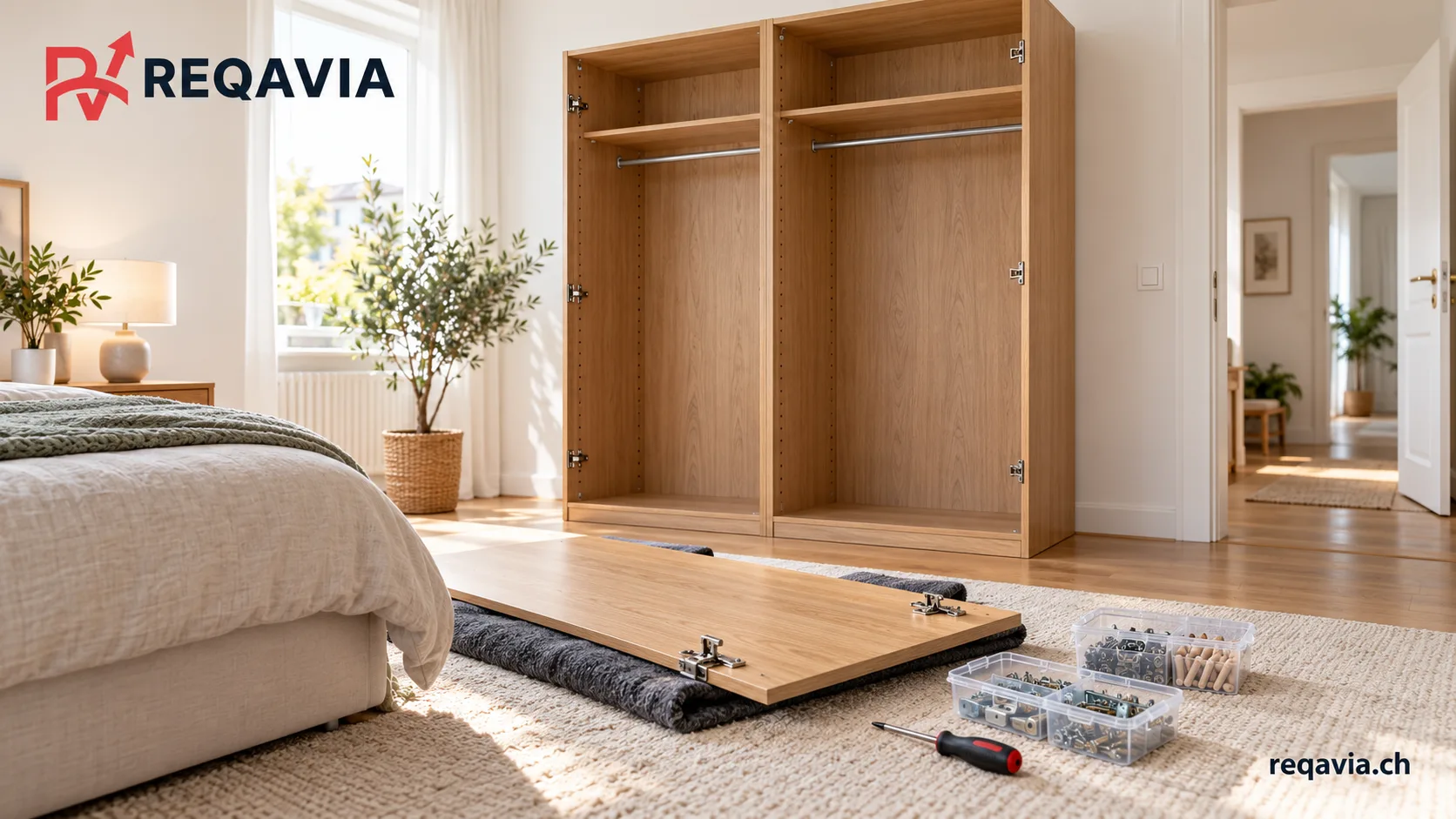
Dismantling a wardrobe can seem an obvious way to save storage space. However, some furniture does not tolerate repeated disassembly well, and missing fittings can make rebuilding it difficult. First check whether the construction and condition allow it to be taken apart, and whether it could leave the property whole. The decision depends on the furniture, the route and the final storage footprint.
Check four things before touching the screws
- Find any assembly instructions or model reference you already have. Photograph the inside, outside and visible joints so you can identify how the components fit together later.
- Look for existing damage, cracked panels and loose connections. Tell the company about them. Adhesive tape is not a repair for a component that needs to carry weight.
- Measure the room doorway, stairs and lift. Compare narrow points with the wardrobe's dimensions in the proposed carrying position. Space inside the vehicle does not solve a doorway problem.
- Agree who will dismantle and reassemble it, and who supplies tools or any necessary replacement fittings. Record these tasks separately from simply carrying the furniture.
If you dismantle it, keep every part identifiable
Empty the wardrobe completely. Mark panels and components without damaging their surfaces, and photograph useful stages. Keep fittings in clearly labelled containers associated with that piece of furniture. Protect edges, glass and mirrors. Do not position long panels where they could fall over or bend during storage.
Heavy or unstable components need an appropriate handling plan. Clarify this with the company doing the work before anyone improvises. Suva's prevention guidance recommends planning how loads are moved and using suitable handling aids.
A common mistake is mixing screws from several wardrobes in one bag or discarding parts that appear unnecessary. Keep everything removed until reassembly is complete and has been checked. If you cannot identify a fitting, photograph it and ask for advice rather than substituting an unsuitable part.
Does dismantling actually save enough space?
Ask the company to estimate the storage space and working time for both options. During a short storage period, a small reduction in volume may not justify the extra labour. On the other hand, dismantling may be necessary to pass through a narrow opening. There is no single rule that suits every wardrobe or property.
In your moving or storage request through REQAVIA, give the wardrobe's dimensions and condition, mentioning mirrors or sliding doors. Describe the joints and access route in writing. Share any necessary photographs directly and privately with the company afterwards. REQAVIA connects the parties; agree dismantling, protection, reassembly and responsibility for components directly with the company. Plan for a usable wardrobe at the destination before it leaves your home.