
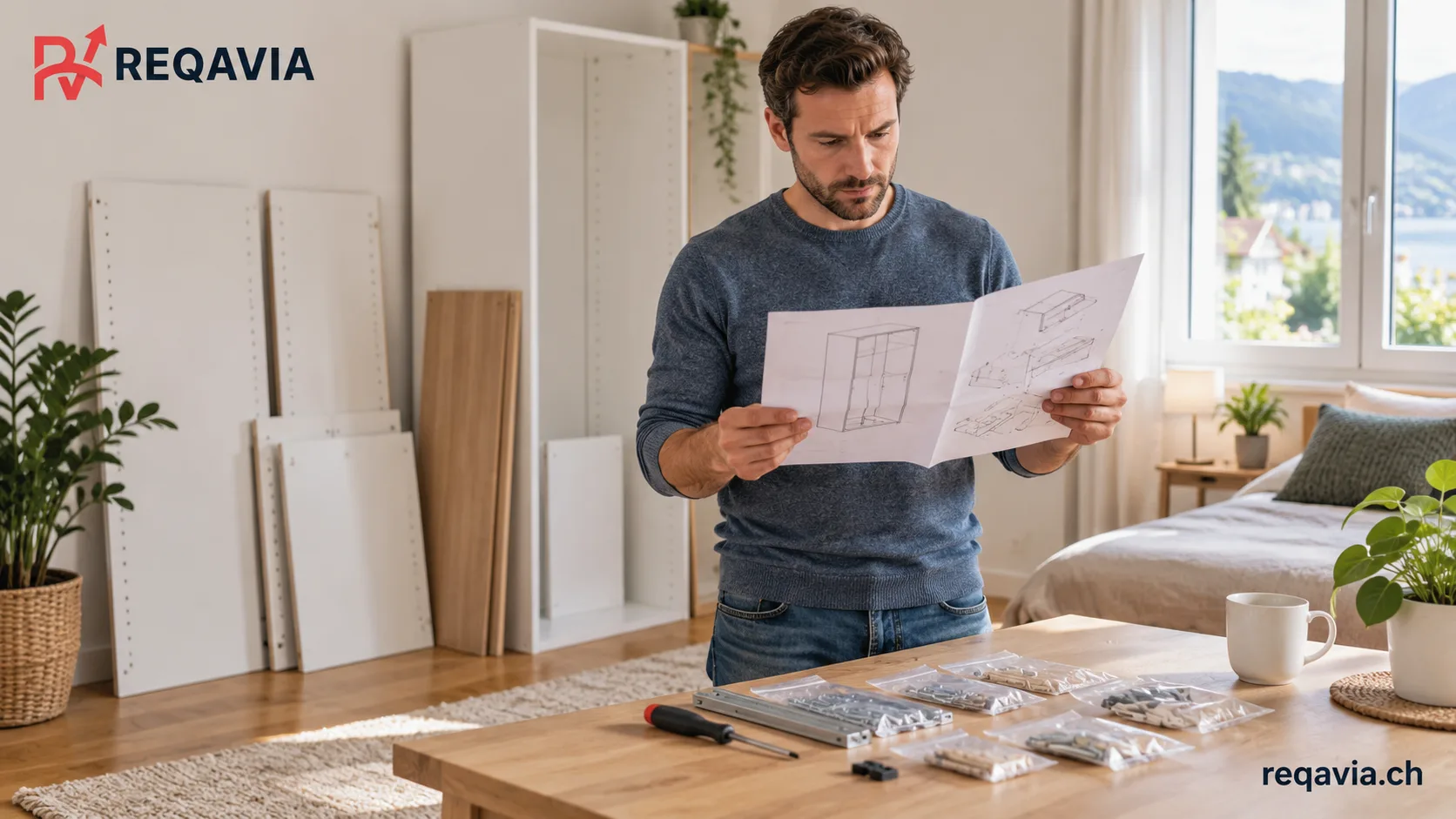
Not every wardrobe can travel assembled, and not every one tolerates repeated dismantling equally well. The decision depends on size, condition, fixings and the route to the vehicle. Mention wall attachments or glass doors early. The aim is a method that allows the wardrobe to be put back into use, not merely removed from the room.
Gather information before undoing screws
- Photograph the wardrobe inside and outside, as empty as practical, noting loose parts or existing damage.
- Find assembly instructions or a model number and identify wall fixings that need suitable handling.
- Ask whether dismantling and reassembly are included and how damaged or missing components would be handled.
- Measure the new position, including ceiling height, door-opening space and room to carry out assembly.
If you agree to prepare shelves or contents yourself, distinguish that from structural dismantling. Put small parts in suitable bags identified by wardrobe and component, and keep them with the relevant accessories. Do not combine screws from several items and rely on memory. Photographs of the sequence can help, but they do not replace manufacturer instructions or the experience of the person doing the work.
Decide whether moving it makes sense
An older, less robust wardrobe can require significant dismantling and transport work compared with its usefulness in the new home. That does not automatically mean disposing of it. Compare its condition, your needs, repair options and the cost explained by the company. If you decide against moving it, update the inventory and agreement rather than leaving the decision to the team on the day.
A common example is a wardrobe that fits the new wall but lacks the ceiling clearance needed for its usual assembly method. Send measurements in advance. Do not assume secure attachment to the new wall is included or can use the previous method: different surfaces may require suitable expertise or permission.
A frequent mistake is dismantling everything on the last evening and leaving unlabelled, unprotected panels. Agree who handles each stage and where parts can stay safely outside the walking route. In a REQAVIA request, state the number and type of wardrobes and the dismantling and assembly required. Confirm the scope directly so the result is usable furniture rather than a collection of unidentified parts.