
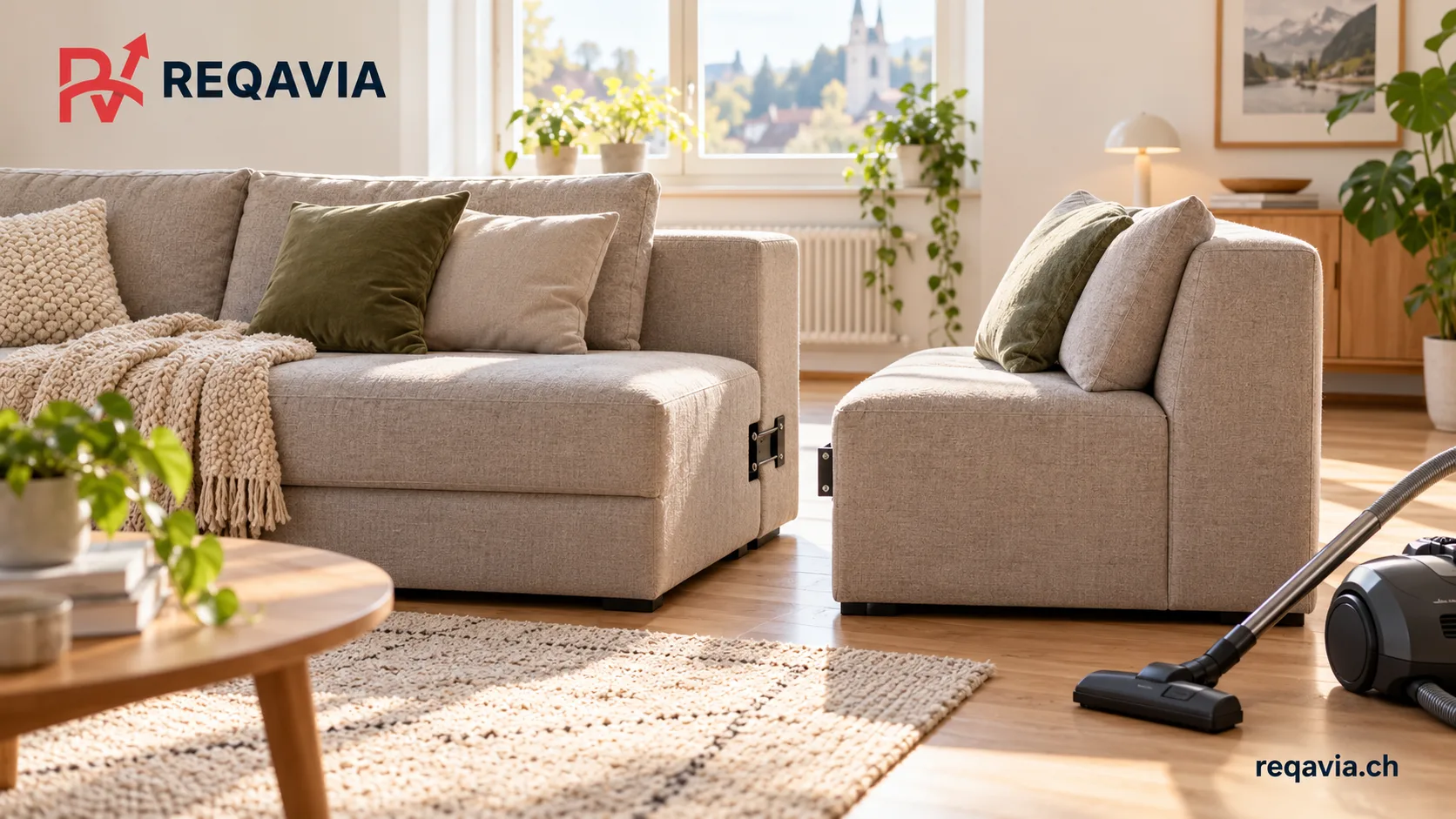
Crumbs between the sections of a corner sofa do not automatically mean that an upholstery cleaning visit includes disconnecting the whole unit. Some sofas have independent modules; others use mechanical fasteners or powered recliners. Identify how the sofa is assembled before deciding what can be cleaned. Treat cleaning the visible upholstery, reaching the gaps and moving a unit to clean the floor as separate tasks rather than one undefined “deep clean”.
Identify the sections and their connections
Count the sofa modules and note where the debris collects: between seats, under a chaise, behind a backrest or close to a storage compartment. Describe any visible joiners, legs, controls or cables, without pulling them apart to investigate. A gap visible from above does not establish that the sections can be safely separated by hand. Approximate external dimensions and space around the sofa will help the company assess access.
Ask who would assess the connectors and who would detach and reconnect the sections if that is necessary. Mention any electrically adjustable seat or powered component before the visit. Do not expect a general cleaner to disconnect unfamiliar wiring or test a motor after an improvised reassembly. If the furniture needs specialised handling, arrange that assessment separately and keep any agreed loose fittings associated with their original section.
Separate three parts of the cleaning quotation
The first part is cleaning the exposed upholstery. The second is removing crumbs from gaps that the company can reach without unsafe manipulation. The third is cleaning the floor beneath the modules after moving them, but only if moving them is explicitly included. Ask the provider to confirm each part. A limited clean of accessible crevices can still be useful; it should not be described as the complete interior treatment of a sofa that was never opened.
For a large sectional, discuss the workers, equipment and temporary space required if modules must move. A narrow doorway, a sensitive floor or nearby furniture can change what is practical. [BFU's Swiss cleaning advice](https://www.bfu.ch/de/ratgeber/putzen) stresses planning and avoiding improvised work. Do not make a last-minute solo attempt to shift heavy furniture just because the cleaner has uncovered another inaccessible patch.
Prepare the area without damaging the sofa
Remove blankets, personal objects and loose cushions you can handle normally. Empty built-in compartments only as permitted by the item's design. If you think a pin, broken component or other sharp object is lodged in a gap, tell the company instead of reaching blindly into it. Make a clear walking route and identify somewhere safe for a module to stand temporarily, if moving it has been agreed.
Check the care information already available for the upholstery and describe earlier stain treatments or any visible deterioration. Velvet, leather, coated textiles and other fabrics may require different assessments; appearance alone cannot confirm the right cleaning method. Ask what the proposed service can reasonably address and what it would exclude. Do not equate repeated wet treatment with a better outcome, or assume the company will repair a fastening or electrical feature.
Agree who puts the furniture back
Before work starts, name the person or provider responsible for joining any detached modules and checking the mechanical connections. If a cable or motor appears damaged or wrongly connected, stop and obtain an appropriate assessment rather than testing it casually. Agree who protects the floor and how long any cleaned upholstery must remain unused or dry under the chosen method.
At the end, inspect the agreed accessible upholstery and floor areas. Record any inaccessible gap, module that remained in place or pre-existing damage separately. If further access work is needed on another day, get a new, clear description of that work and any additional price. Do not turn an excluded area into a dispute by assuming it was included without discussion.
In your REQAVIA text request, give the number of modules, visible connections, any electrical features, the location of crumbs and the three areas you want addressed. Share helpful photographs privately and directly with the company during coordination. REQAVIA is an intermediary; you agree the actual tasks, price and execution directly with the provider.