
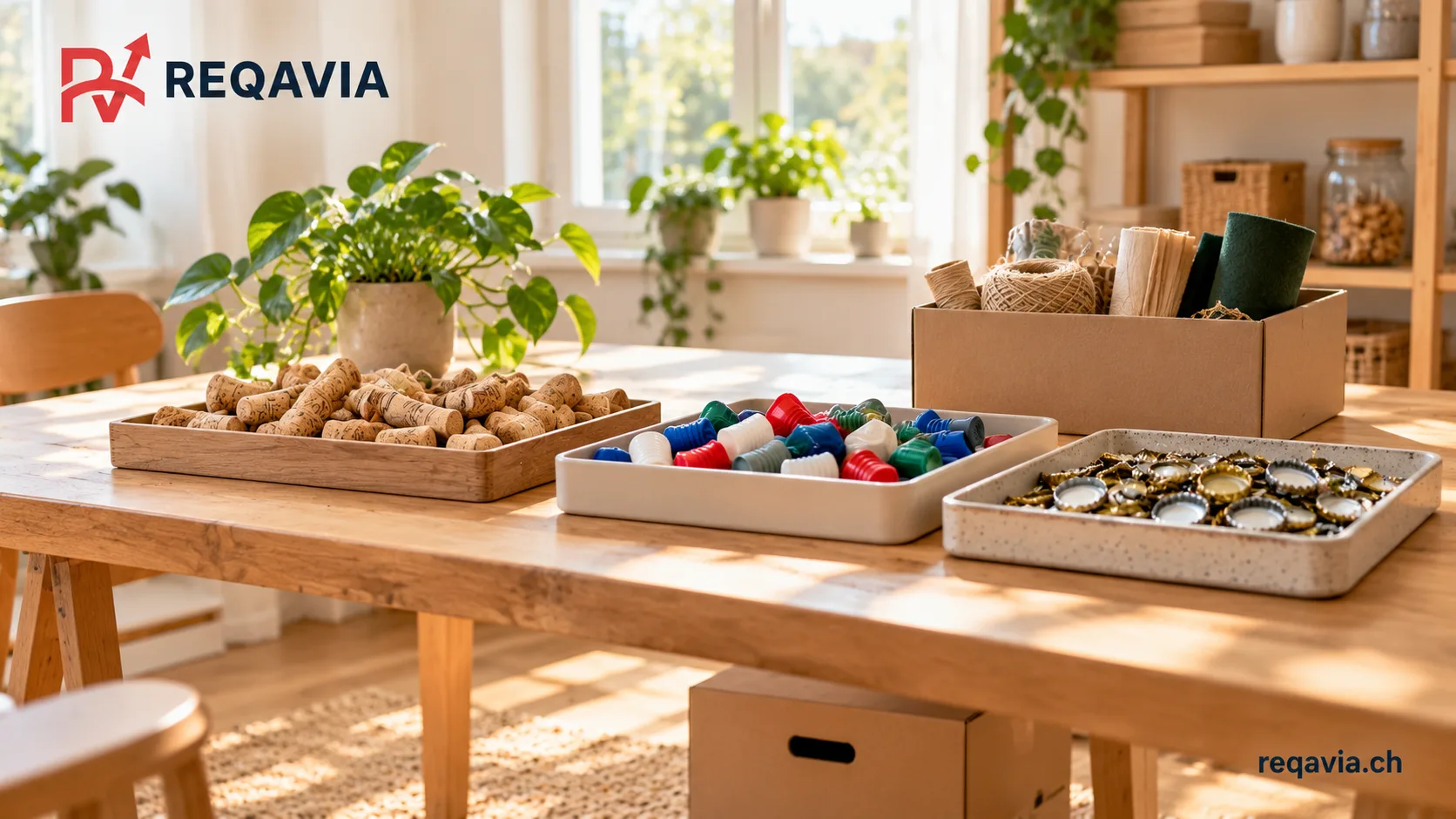
A collection of corks, caps and craft scraps does not need to move with you indefinitely. Start by choosing the projects you still want to make, then keep a defined quantity for those projects. Sort the remainder by what the material actually is and confirm who will accept it. “Useful for crafts” is a possible use, not a description that settles collection or donation arrangements.
Make the collection small enough to assess
Take out one manageable portion at a time on a stable surface. Separate natural corks, synthetic stoppers, metal caps and other pieces instead of treating all bottle closures as one material. If you cannot identify something, give it an uncertain category. Do not guess its composition simply because it looks similar to the rest.
Describe condition as well as type: clean, used, painted, glued together or with an unknown residue. Keep doubtful pieces apart while you ask for advice. Do not try to make unidentified contamination acceptable through an improvised cleaning method, and do not offer such items for children's activities. Sorting should make uncertainty visible rather than hide it in a larger box.
Put a limit around what you keep
Name the project, estimate the quantity you need and decide where the supplies will live. If you have not tried the idea, retain enough for a small trial rather than every piece collected over several years. Keep essential matching parts together. A small labelled container is easier to review than a mixed bag whose contents must be rediscovered each time.
Choose a review point linked to the project, such as after making the first sample or before the next move. Ask whether you still enjoy this activity and have room for the result. You can stop collecting for an abandoned project without deciding to give up the hobby itself. Avoid buying more storage merely to postpone this decision.
Confirm a recipient before arranging delivery
If somebody may use the surplus, describe the material, condition and approximate quantity. Ask what they actually want and how they would like it packed. A school, community group or acquaintance should not receive an unannounced mixed collection just because you imagine it might be useful. A possible recipient is not a confirmed destination.
For disposal, ask your municipality's waste service or the identified collection point about each material separately. Explain any coatings, glue or uncertainty. Follow the instructions for that location and collection scheme rather than applying a rule from another town. Keep the groups separate until you have a clear answer; the fact that everything once closed a bottle does not establish a shared collection route.
Prepare the agreed part for collection
Put approved groups into suitable containers and identify their contents and destination. Keep the small amount awaiting advice outside the general clearance load. If it forms part of a larger household clearance, tell the company before its visit. The crew should not discover that a furniture collection also requires an unresolved sorting session at the door.
Record what has been kept, accepted by someone else or assigned to a confirmed collection route. If no answer is available yet, make a short follow-up list with a person and date instead of calling the collection complete. Unknown or potentially contaminated materials need guidance from the competent service before you include them.
Describe the boxes in the request
For a disposal request through REQAVIA, state the number and size of sorted craft-material boxes, their known contents and any excluded items. Explain which destinations are already confirmed. REQAVIA is an intermediary; acceptance, handling, price and collection arrangements are agreed directly with the company or relevant recipient.