
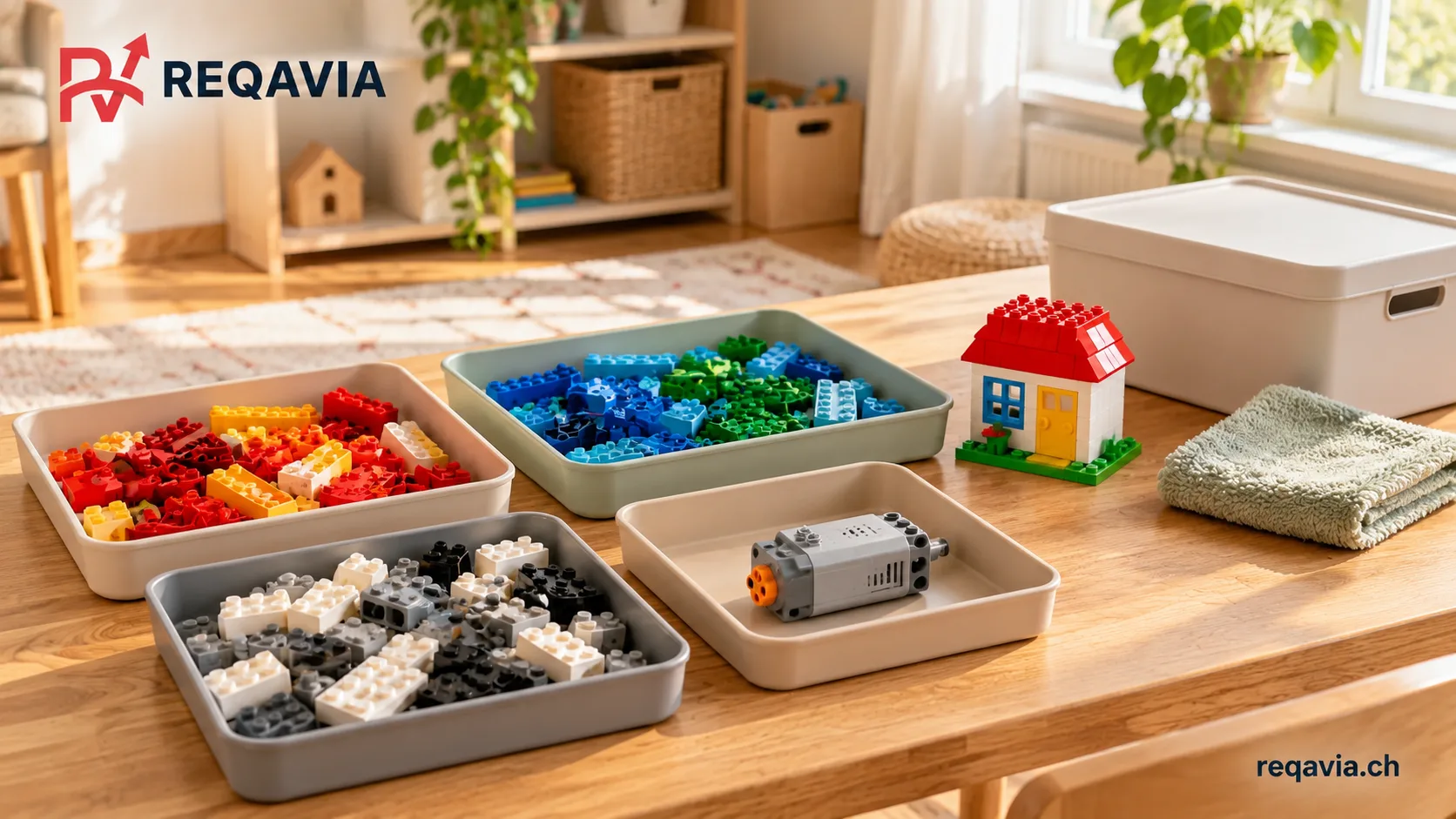
Do not empty a mixed box of construction toys into water simply because most pieces look washable. Start by identifying what belongs together, what must stay assembled and which care instructions apply. Then ask whether a cleaning company accepts this work and what it includes. Cleaning a child’s room does not automatically include sorting hundreds of pieces, caring for electronic components or rebuilding models.
Create groups that can be followed through the job
Before moving anything, mark the constructions that must remain intact. Discuss this with the child where appropriate: a partly built model may look like loose pieces to someone else. Keep each set or existing storage group separate. Use labelled containers and keep the same labels through cleaning, drying and return.
- Set aside electronic, battery-powered, metal or stickered components for individual checks against their own care instructions.
- Identify a group whose permitted care is clear. Similar appearance alone does not establish that every piece can receive the same treatment.
- Provide a separate container for unidentified pieces and unfinished decisions. Nothing from this group should be discarded or cleaned by guesswork.
Note any already missing or damaged parts that matter to you. There is no need to claim an exact piece count if you do not know it. The number and approximate dimensions of the boxes, how full they are and the main types of components give the company a more useful starting point.
Choose care for the toy, without default disinfection
Use the instructions you already have for the particular toy to establish permitted products, contact with water and drying. Do not treat a dishwasher cycle, soaking or one cleaning product as a general solution for the whole collection. If instructions are missing or conflicting, leave the affected group out until the method has been clarified. Ask for specialist advice on damaged or unfamiliar electronic components before including them.
The Swiss Federal Office of Public Health says routine household disinfection is generally unnecessary; special medical circumstances require individual guidance. This does not establish a cleaning method for any particular toy. Agree ordinary cleaning and any specific hygiene requirement separately, without promises of sterilisation.
FOPH: disinfectants in the household, German guidance
Allow space for drying as well as cleaning
Plan a contained work area away from circulation routes and children’s play space. Keep small pieces in their assigned groups, and do not combine several boxes merely to speed up the first stage. BFU recommends realistic planning and dividing larger cleaning tasks; it also warns against water coming into contact with electrical connections.
BFU: planning safer cleaning, German guidance
Check that the available area can accommodate the agreed batches during drying. Follow the applicable care instructions and agree who checks readiness before storage. The end of a cleaning appointment does not necessarily mean the toys can immediately return to a closed box. If space or time is insufficient, reduce the batch rather than leaving the finishing stage undefined.
Agree what the company will hand back
Compare offers by their actual scope. Ask whether the company accepts toy cleaning at all, requires you to sort first, or can take responsibility for identified batches. Clarify whether its work includes drying, returning pieces to labelled containers and any handling of assembled models. Rebuilding and checking every piece against a set inventory need a separate agreement.
Before returning toys to play, match the containers to your group list, check the excluded parts and keep anything still uncertain separate until it has been assessed.
- Describe the box count, approximate sizes, toy types and current state of sorting.
- List models to preserve, excluded parts and any instructions available for the accepted groups.
- State the working area, timing and who will complete drying and check the return.
- Ask how uncertain pieces and any work outside the agreed scope will be handled.
For a household cleaning request through REQAVIA, describe this task in text and ask whether the company can include it. Photos, if useful, can be shared directly and privately with the company during coordination. REQAVIA is an intermediary; you agree the scope, price and execution directly with the company.