
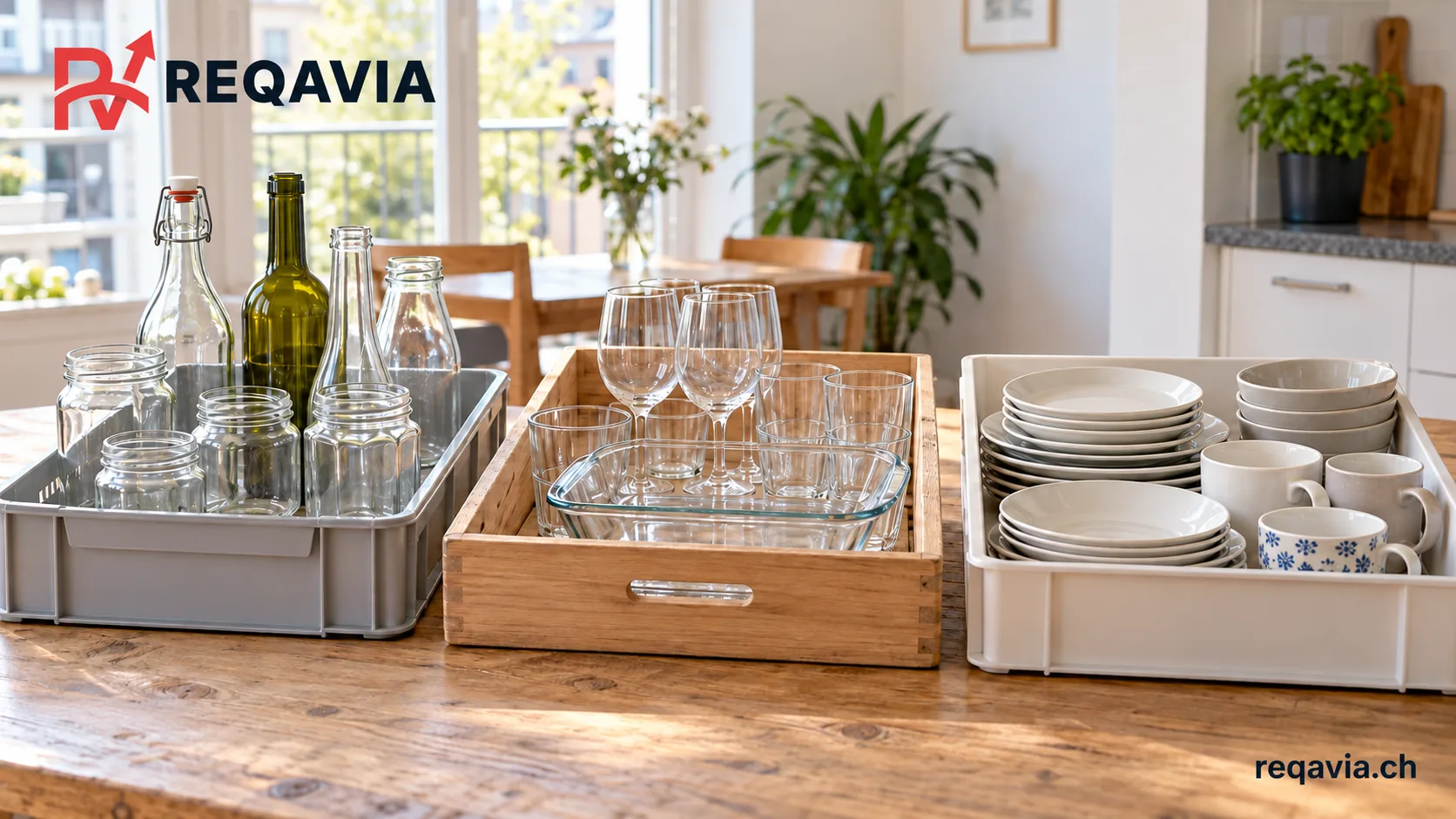
When clearing a kitchen, do not treat every fragile item as the same kind of waste. Decide what you will keep or pass on, then separate the rest by item type. A transparent drinking glass is not automatically packaging glass. A short inventory before packing helps you check the appropriate destination and describe a collection clearly.
1. Keep daily essentials out of the removal pile
Set aside the plates, mugs, cutlery and food containers you will need until moving day or the last use of the kitchen. Check that sets include their lids and other matching parts. Give spare jars a defined storage space instead of keeping every empty container for a possible future use.
You can offer surplus intact items to a specific recipient. Describe their condition and agree a handover date before removing them from the clearance list. Do not present damaged pieces as safe to use without qualification. If an old set may be collectable and you cannot assess its value, consider an independent valuation before making a final decision.
2. Distinguish items by what they were made to do
The [Federal Office for the Environment](https://www.bafu.admin.ch/de/verpackungsglas) distinguishes packaging glass from tableware: glass and ceramic dishes do not belong in glass recycling containers. The [Canton of Zurich](https://www.zh.ch/de/umwelt-tiere/abfall-rohstoffe/abfaelle/abfall-aus-haushalten.html) also specifically excludes glass bowls and oven dishes from that collection.
Create separate groups for food jars and bottles, drinking glasses, ceramics or porcelain, oven dishes and unidentified materials. Use those names in your inventory. “One box of glass” tells the recipient too little. When two items look similar but their classification is uncertain, leave that question open until the responsible collection service confirms it.
3. Check the local route before making a trip
Consult your municipality’s current waste calendar or official website. Use your actual list to ask where each group is accepted, how it should be prepared, what quantities are allowed and whether charges apply. Also check whether a company can deliver the items on your behalf and what information it will need.
Do not apply a Zurich collection point’s conditions, or arrangements from your previous municipality, across Switzerland. Ask about missing information rather than relying on a container’s colour. Keep the answer with the address, opening hours and any agreed appointment. Follow local instructions for lids and closures; keep matching accessories together with items intended for another person.
4. Discuss broken items and difficult boxes separately
Do not deliberately break crockery to reduce its volume. Avoid putting loose, unprotected sharp fragments into thin bags. Tell the collection point or removal company about existing breakage and ask how to package and hand it over. Do not reach blindly into mixed boxes. Keep prepared containers away from children and pets.
Distribute intact items between containers that remain stable, closable and suitable for the intended handling. Note the number of boxes and their approximate dimensions. If you cannot move a box safely, ask the company to assess the handling instead of lifting it simply to estimate its weight. An old container holding an unknown liquid needs a separate enquiry.
5. Request a collection you can check against a list
Describe the number, contents and condition of the containers, the floor, lift access, route to the vehicle and preferred date. List any furniture to be removed during the same visit separately. Compare whether packing, carrying, transport and the agreed disposal are included. Establish what happens to rejected items beforehand: arranging transport does not secure acceptance at a collection site.
You can submit this written description in a disposal request through REQAVIA. If photographs would help clarify the job, share them later directly and privately with the company. REQAVIA is an intermediary; you agree the scope, price and execution directly with the service provider. At the end, check your inventory to see which groups were taken and which still need an agreed solution.