If you and the cleaning team do not share a fluent language, make the job easier to confirm rather than writing a longer message. Use short instructions tied to named rooms and surfaces, explain what must remain untouched, and ask the company to confirm how communication will work. A translated phrase such as “complete cleaning” still leaves the actual scope undefined.
Name the surface and the action
Divide the brief by room. “Kitchen: clean the outside of the cupboard doors” is clearer than “do the kitchen properly”. Distinguish inside and outside, accessible and inaccessible, included and excluded. Write one action per sentence. Avoid jokes, dialect expressions and references to what a previous team always did. A new employee cannot know your household routine from those phrases.
Identify priorities separately from optional work. For example, the bathroom and entrance floor may come first, while a cleared shelf is secondary if the agreed time allows. Ask the company how it will handle a list that exceeds the available visit. This is a choice about scope and time, not a reason for someone to rush or silently skip an important exception.
Make exclusions visible and specific
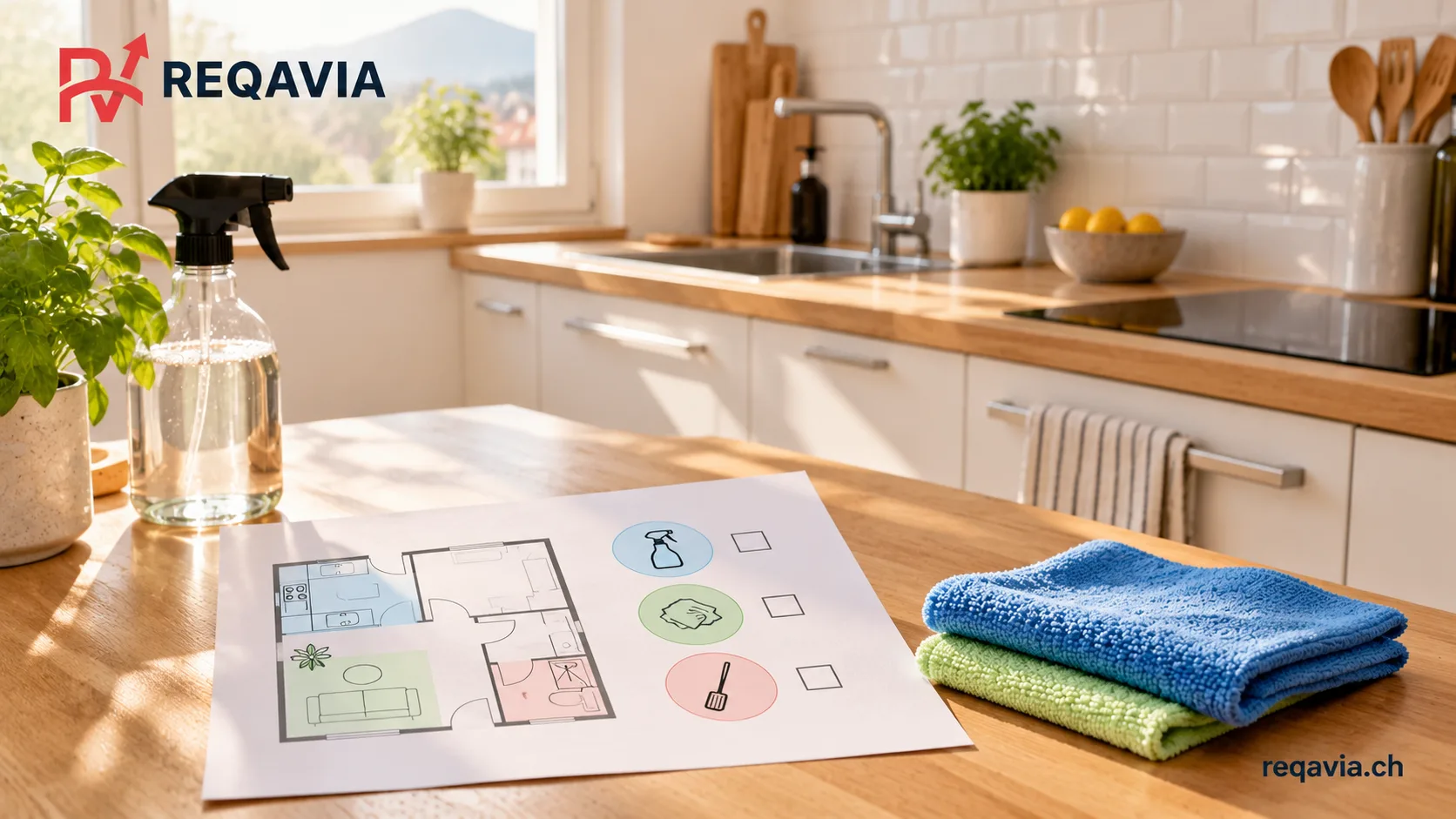
State which drawers must stay closed, which equipment must not be moved and which surfaces require clarification before treatment. Use stable room names and object descriptions throughout the brief. If you use a sketch or a removable marker nearby, explain it in words too. A colour, arrow or hand gesture alone should not carry the whole meaning of an instruction.
Useful photographs can show a location during direct coordination with the company. Keep personal documents, people and unnecessary room details out of the image where possible. Do not send a photograph of an entire private drawer to explain that its exterior must be cleaned. A tightly framed view of the relevant surface may be enough. Photos support the written scope; they do not replace agreement about handling.
Confirm the important points together
At the start, ask the team leader to explain the main task and the most important exclusion in their own words, or point to the corresponding places. Correct the description calmly if necessary. This checks the shared understanding without turning language ability into a test. Keep one current version of the brief so that an old translated message does not contradict the instructions on site.
Suva’s prevention guidance calls for discussion of the workplace, tasks and trip hazards with cleaning staff. Tell the company about specific access problems, loose cables or an area that cannot be used. If safety-critical information cannot be understood reliably, pause that part of the job and arrange suitable communication through the company before proceeding.
Do not improvise product instructions
The Federal Office of Public Health advises following chemical product instructions and warnings. Do not reduce a label to “strong cleaner” or invent a dose through an unverified translation. The company should ensure that the person using a product understands its instructions and the appropriate application. If you supply a product already in the home, identify it clearly and ask whether the company accepts using it; do not assume this is included.
Agree on a reachable contact, a shared communication channel and what happens when a question remains unanswered. A sensible instruction is to leave the uncertain surface untouched and continue with agreed tasks where appropriate. At the end, review the same room list and record any unresolved item rather than relying on a general “everything fine”.
In your REQAVIA cleaning request, state your preferred communication language, main tasks, exclusions and availability during the visit. The request is text-based; share any useful photos privately and directly with the company later. REQAVIA is an intermediary and does not guarantee a particular language arrangement. Confirm communication, scope, price and execution directly with the company.