
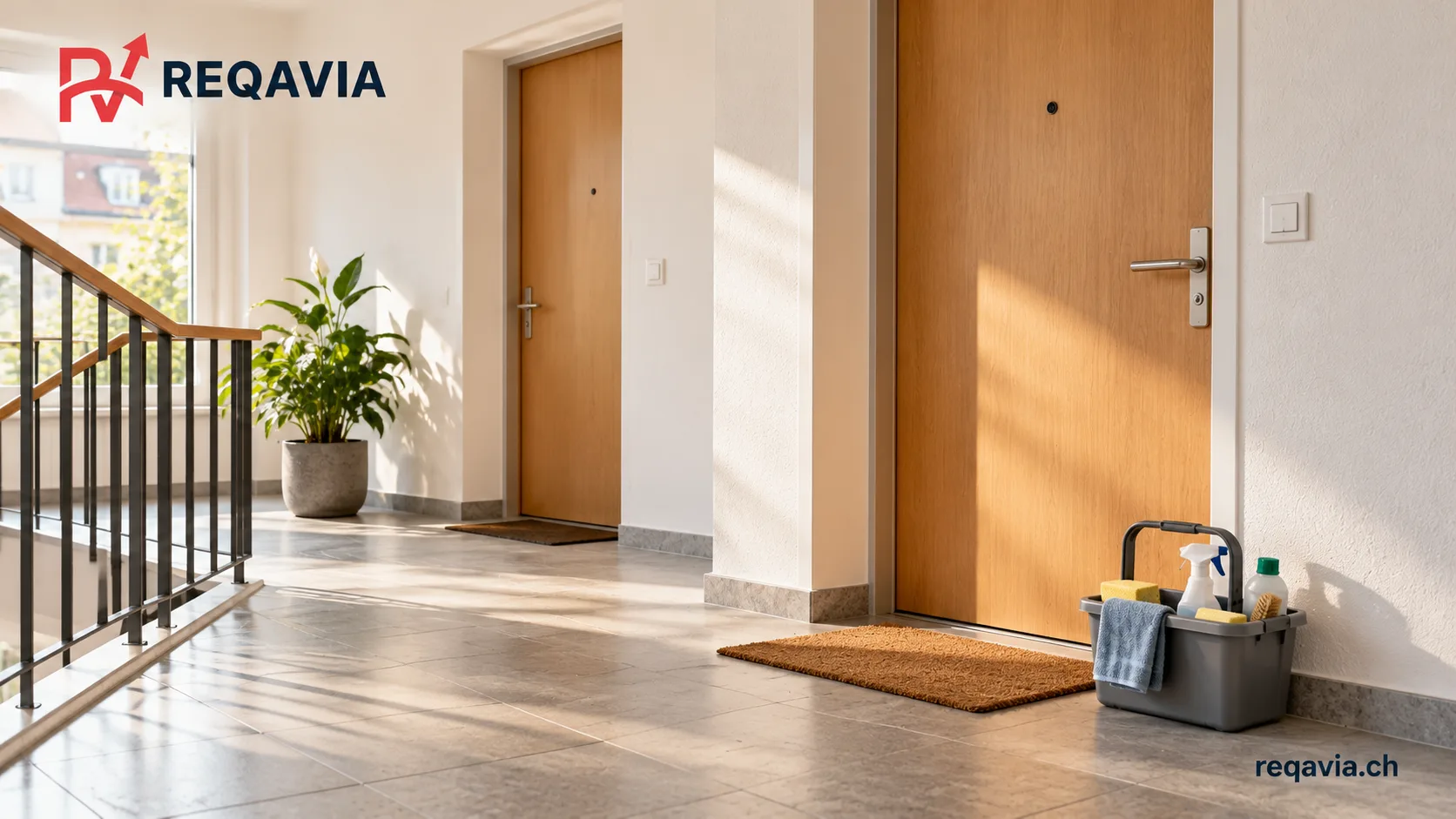
Give the cleaning company a short route to the actual apartment, not just its postal address. In a building with several entrances, the same apartment number may be confusing without the staircase or floor. Before the appointment, agree where the team should arrive, whom it should contact and how you will confirm the correct home before equipment is brought inside.
Walk the route as a first-time visitor
Start at the point where someone unfamiliar with the building would arrive. Note the street and building number, the entrance actually used, the staircase if relevant, the floor and the apartment identifier. If navigation points to a service entrance or a different side of the complex, describe the turn or landmark that resolves the ambiguity.
Use stable features, such as the entrance facing the courtyard, rather than a neighbour’s name or a parked vehicle. Avoid directions that depend on knowing which side you consider the back. If two doors fit your description, improve it. Check whether the name on the bell matches the name the company has been given.
Separate directions from permission to enter
The initial text request can explain access constraints, such as a locked communal entrance, an appointment with the caretaker or stairs beyond the lift. It does not need a permanent entry code, a photograph of a key or account credentials. Share any necessary access detail privately with the selected company through the agreed contact channel.
Ask the company who needs the information and who will be your contact on the day. Follow the building’s access arrangements. Do not rely on a neighbour letting an unidentified team through, or on a communal door being left open. If a caretaker must attend, confirm that arrangement rather than merely giving their name.
Include every space in the cleaning scope
A cellar, garage or separate utility room may have a different route and key. Identify each included space consistently in the description and the agreed work list. State which nearby doors and shared areas are outside the job. An adjacent room should never become part of the visit simply because it is accessible.
Explain any equipment access difficulty: a narrow passage, steps before the lift or a long walk from the permitted unloading point. Ask the company whether it needs measurements or an advance assessment. Describe the obstacle instead of promising that its equipment will fit. Keep the route available when the team arrives.
Agree what happens if something is unclear
Choose a contact who can answer at arrival and a backup if appropriate. Confirm the appointment reference and the apartment before unlocking or starting work. A similar door number is not enough reason to enter. If the location cannot be confirmed, agree that the team waits for clarification and discusses any effect on the schedule with you.
A simple arrival message can say: “Use the courtyard entrance, staircase B, second floor; call me at the entrance.” Adapt this to the building’s actual labels. If a photograph would help, share only the relevant view directly and privately with the company, avoiding people, documents and unrelated doors.
Put useful arrival details in your request
For a cleaning request through REQAVIA, describe the current address, included rooms, preferred date, entrance route and general access restrictions. Mention whether someone will meet the team and whether annexes need separate access. REQAVIA is an intermediary; the company agrees the appointment, price and work directly with you. Confirm the detailed arrival plan with it before the visit.