
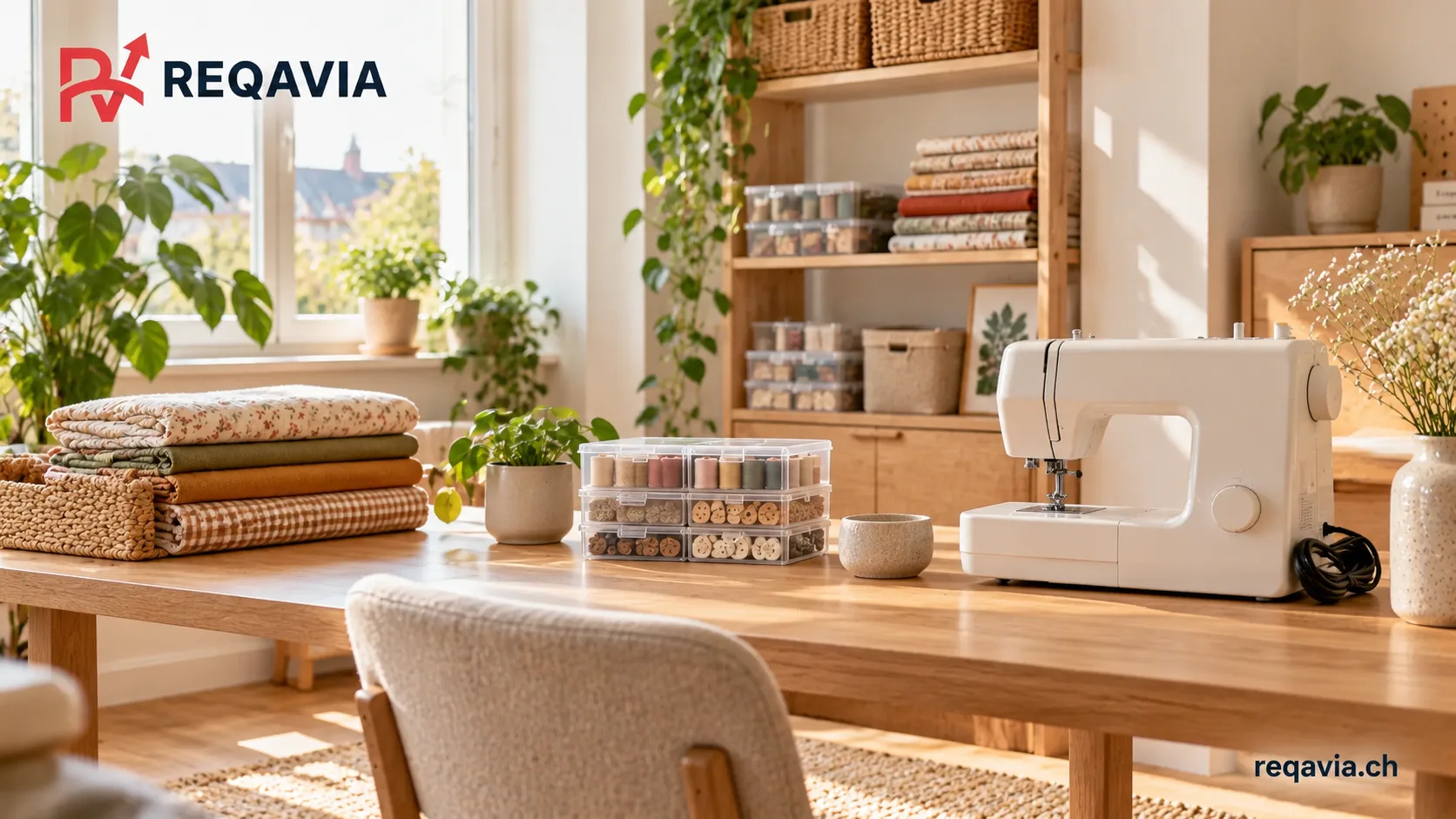
Prepare a sewing or craft room by deciding what can be cleaned, what must stay untouched and what is genuinely waste. A small fabric offcut may belong to an unfinished project, while a tiny component can look insignificant to someone else. Do not expect the cleaner to identify these differences while working. Clear the agreed surfaces and explain the remaining limits before the visit.
Give unfinished projects a defined home
Gather the parts of each active project into an identifiable container or tray, keeping related pieces together. Include the apparently ordinary items that matter to the project: paper patterns, test swatches, loose fasteners or a matching thread. Choose a place outside the cleaning zone and record where you put them.
Separate materials you have decided to keep from waste you have actually approved for removal. The team should not judge value by size, age or untidiness. If sorting is still unfinished, exclude that area and say so. A cleaner can assess a smaller accessible job more reliably than a room described as ready when decisions are still open.
Deal with sharp items before general cleaning
Check for loose needles, pins and cutting tools in the areas you can safely inspect. Secure them in suitable closed storage rather than leaving them among thread scraps. Do not ask the team to discover sharp items with a vacuum or sort them out of an unidentified waste bag.
If you cannot prepare an area safely, tell the company before it accepts the work and ask what assessment or preparation is needed. Do not conceal the concern under a cloth to make the room look orderly. The relevant information is the actual condition of the floor, worktable and access, not simply the room’s square metres.
Separate machines from the room surfaces
Define whether the job covers the table, accessible shelves and floor while leaving sewing machines, presses and other equipment outside the scope. Cleaning a room does not specify dismantling a machine, lubricating it or cleaning inside its casing. Follow the care instructions for your own equipment and arrange technical work separately where required.
Describe pedals, cables and accessories that occupy the area below the table. Agree who prepares them and where they will remain. Do not make the cleaning depend on a worker disconnecting an unfamiliar installation on arrival. If moving equipment is needed for access, have that task assessed and included explicitly rather than assuming it accompanies the floor clean.
Explain the residue accurately
Tell the company what the hobby produces and where it collects. Ordinary loose threads are a different description from unidentified sanding powder or residues from specialist materials. If you do not know the material, state that uncertainty. Ask whether the proposed service can assess it before choosing a cleaning method.
[Suva’s prevention guidance](https://www.suva.ch/de-ch/download/checklisten/stopp-den-stolper--und-sturzunfaellen-beim-reinigen-von-gebaeuden/stopp-den-stolper--und-sturzunfaellen-beim-reinigen-von-gebaeuden--67189.d) calls for briefing workers on the work area and hazards. For your request, this means describing relevant conditions rather than relying on a wide photograph that hides the floor.
Request and review the accessible job
In the text request, describe the hobby, rooms, prepared surfaces, excluded machines, remaining obstacles and timing. Share relevant photographs directly and privately with the company if useful, avoiding personal documents. After cleaning, check the agreed surfaces, clear route and location of project containers; distinguish cleaning from reorganising your workspace.
You can request suitable cleaning through REQAVIA. It acts as an intermediary; the company agrees the scope, price and execution directly with you. Confirm preparation and exclusions with it so the room returns ready for your work, with its small but important parts still identifiable.