
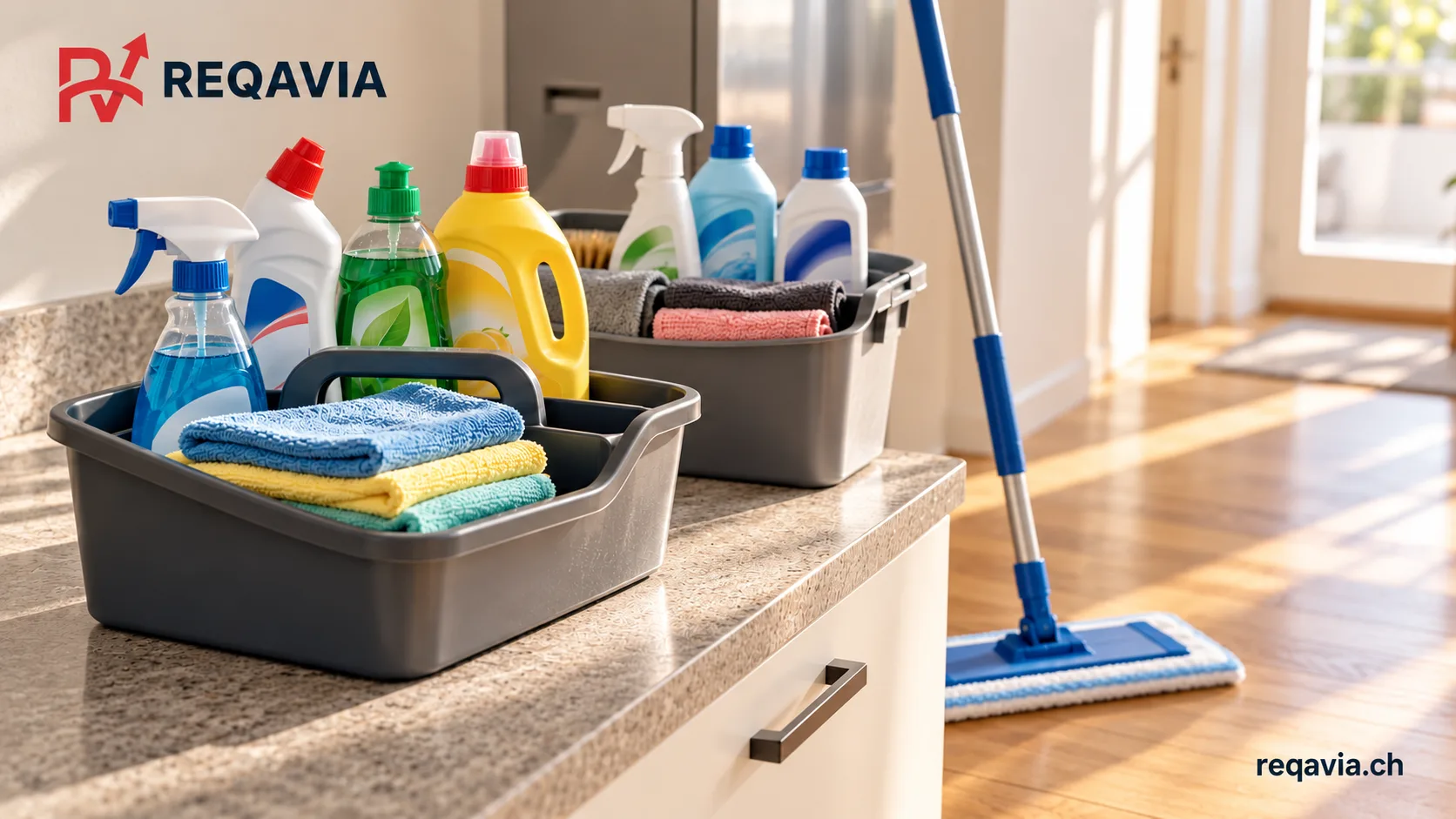
Ask who supplies the cleaning products and equipment before confirming the visit. A company may expect to use what is in your cupboard while you assume its quotation includes everything. Even if you have plenty of bottles, that does not establish that the contents suit the surfaces or the planned work. Make one agreed supply list, with any exceptions, so the visit can start without an improvised shopping trip.
Begin with surfaces, not a shopping list
Note the flooring, worktops, sanitary fittings and appliances included in the job. Record the material or finish where you know it, and identify anything uncertain instead of guessing from appearance. Collect the care information you already hold for sensitive surfaces. Ask the company what it proposes to use and what it needs from you to assess suitability. An expensive product already bought is not a reason to insist it be used everywhere.
Describe previous treatment too: a product used on one patch, a recent coating or a mark that appeared after cleaning. Do not try additional products to improve the appearance before showing the problem. If the surface is damaged or its care requirements remain unclear, exclude that area temporarily and arrange appropriate assessment rather than treating it as an ordinary stain.
Choose a clear supply arrangement
- The company supplies products and tools: ask what is included and identify any surface needing a different arrangement.
- You provide specified items: obtain a precise list in advance and ask the company to confirm it can work with them.
- A mixed arrangement: the company brings its usual equipment, while an agreed product or tool is reserved for a particular surface.
Put the chosen arrangement in the quotation or written confirmation. Include cloths, mop, vacuum cleaner, access equipment and any specialist machine, not just liquids. State where water and electricity are available. Ask who moves the equipment, takes it away and replaces any consumables. Do not assume a domestic appliance you own is suitable simply because it is available.
Keep product information with the product
The Federal Office of Public Health’s cheminfo campaign advises reading hazard information and following the instructions for use. Keep products in their original containers, and do not decant them into food or drink packaging. Do not mix leftover chemical products. The campaign’s educational material explains the risks of unplanned mixing and losing identification.
cheminfo: safe handling at home (German)
cheminfo: educational material on chemical-product handling (German PDF)
Tell the company which product was used previously on a particular area. Put damaged, leaking or unidentified containers outside the agreed supply list; do not ask the team to identify a liquid by smelling it. Agree a suitable storage place for accepted products, away from children, and who returns them there after work. Follow the product’s storage instructions.
Decide how substitutions will be approved
Write down any excluded product or fragrance preference. If an agreed item runs out, should the company contact you, leave that surface until another visit or use a specifically approved alternative? A substitution needs to respect both the surface and your stated requirements. Avoid a vague promise to “use something similar”, especially where you have supplied particular care instructions.
Compare the complete service and request it clearly
Check whether products, equipment, transport and any extra preparation are included in each offer. Ask how an unavailable item would affect the work and price before the appointment. In a REQAVIA text request, describe the surfaces, tasks, supply arrangement and restrictions. REQAVIA is an intermediary; you agree scope, price and execution directly with the company. Share relevant photographs or care information directly and privately during coordination. At the start, confirm the agreed items; at the end, record any substitution for the next visit.