
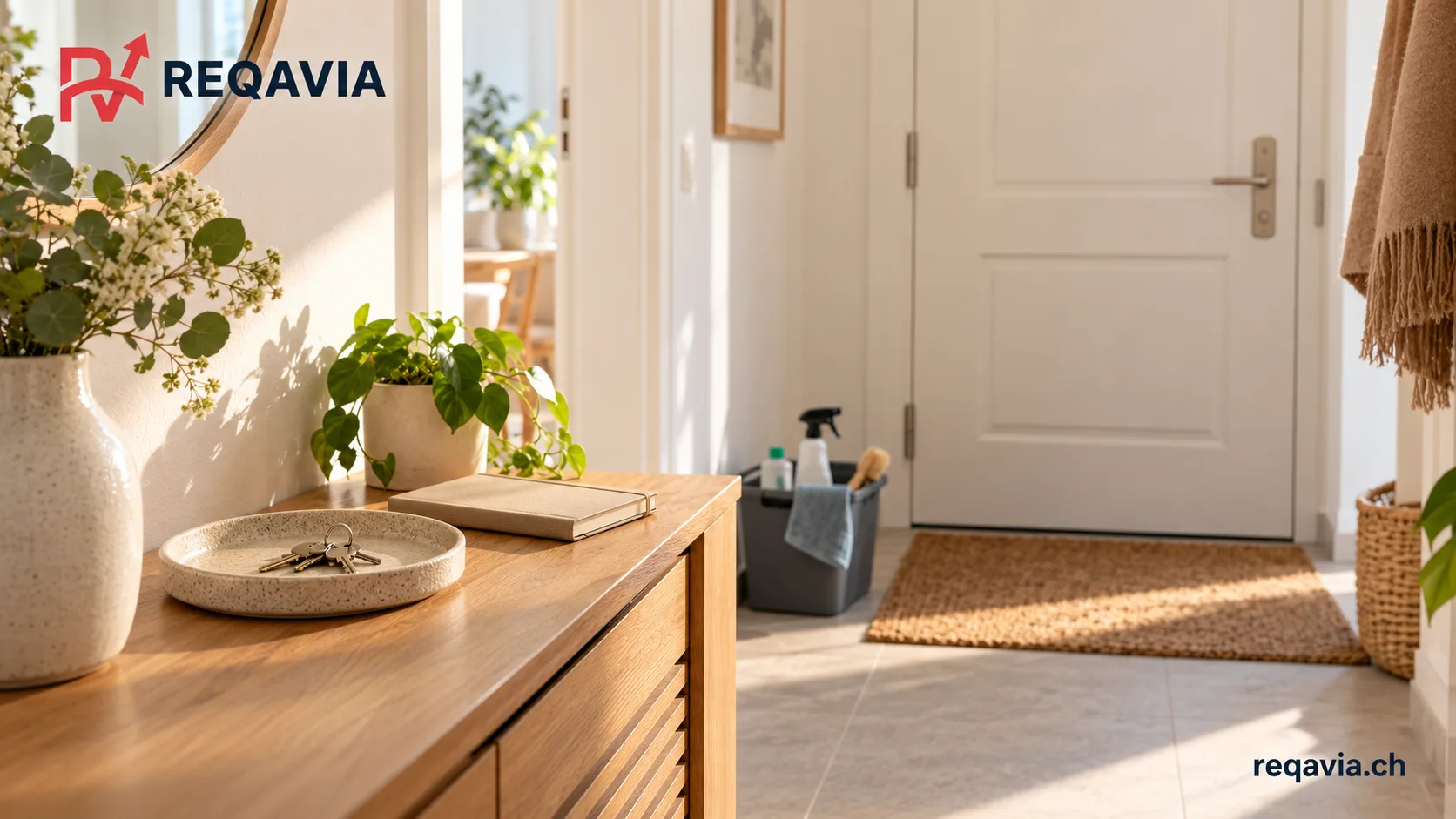
If cleaners will work while you are away, agree access before the morning of the visit. Identify the person receiving the key, how arrival will be confirmed and who will receive it back. Give the company a clear route through the arrangement from entry to departure, including what to do if the planned recipient or timing changes.
Choose a handover you can verify
Coordinate with the company contact you already know. Confirm the recipient and appointment through that established channel, especially if another team member replaces the usual cleaner. If a trusted person hands over the key for you, give them the expected name, time and scope. Hearing the word “cleaning” at the door is not enough to identify an agreed visitor.
Lucerne Police’s prevention advice says not to hide keys under doormats or in flowerpots, or announce absence with a door note. Arrange a direct agreed handover instead. If the company proposes another access method, discuss the actual arrangements privately before deciding; do not improvise a hiding place because the visit is about to start.
Lucerne Police: home security (German)
Keep a short access record
List the date, number of keys or access items, recipient and intended return time. Use a neutral identifier where helpful instead of attaching your address to a key carried outside. Confirm whether the key opens only the flat or also a building entrance, and disclose only the access information needed for this agreed task.
Decide what happens if work finishes early, your return is delayed or the named contact becomes unavailable. Identify who may receive the items back and how that return is acknowledged. Do not assume that passing a key to someone else on the team closes the arrangement. Keep the handover and return confirmations with the visit record.
Define the permitted work area
Write down included rooms, closed rooms, approved supplies and objects to leave untouched. Put personal documents and private belongings outside the work areas. Explain any household arrangement the company needs to follow, such as keeping a particular door closed. Do not include account passwords or device logins; those are not part of the cleaning description.
If completion photographs are useful, agree their limited purpose and the areas shown. Keep faces, family photographs and documents out of the frame. The federal data protection authority discusses people’s rights over their own images; it is a useful reminder to keep work records focused on the task. Send them only through the agreed direct contact.
FDPIC: photographs and video surveillance (French)
Agree a departure message and a fallback
A short departure message can confirm the work completed, unfinished points, the agreed key-return step and anything needing your attention. Specify who checks doors and windows opened during cleaning and any other closing task within the agreed scope. Use one appropriate contact rather than a broad group containing people who do not need the access details.
If entry fails, ask the team to contact that person and wait for an agreed decision. Do not encourage improvised entry, access through another dwelling or disclosure of codes to someone whose role has not been checked. Agree whether the visit can be rescheduled if the authorised arrangement cannot be completed.
Close the arrangement after the visit
On returning, review the agreed areas and confirm that every access item has been returned as arranged. If an item is missing or there is uncertainty about who holds it, contact the company promptly and resolve the situation with the responsible parties. Update the arrangement when the team or access method changes, rather than relying on a message from an earlier visit.
For a REQAVIA text request, say that cleaning requires access coordination during your absence. Keep door codes and key locations out of that description. REQAVIA is an intermediary; price, scope, access and execution are agreed directly with the company. Share any necessary photographs or sensitive coordination details privately with the company you have selected.