
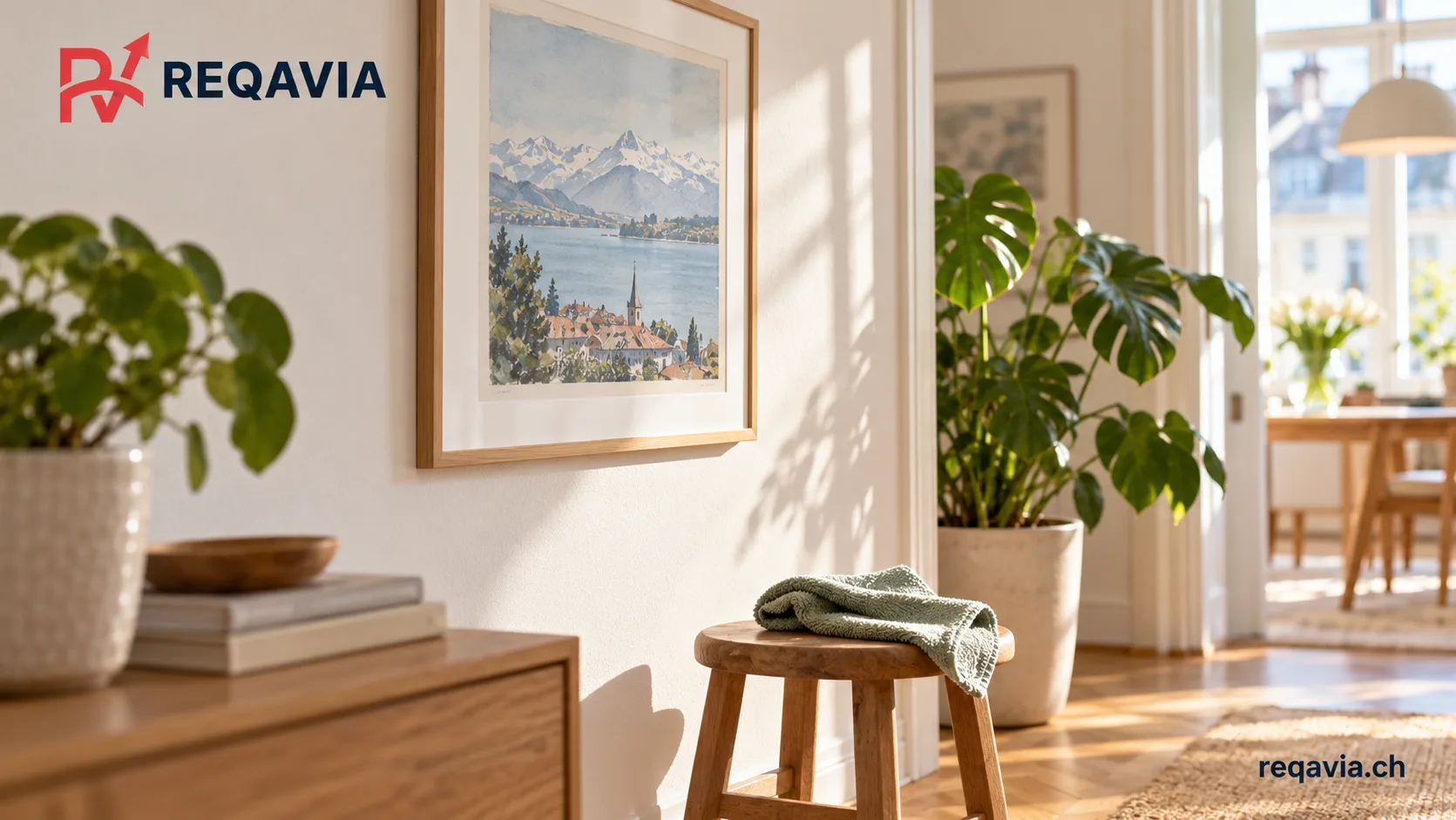
Dust around a framed picture does not mean that the picture itself should be included in an ordinary cleaning visit. Start by separating three tasks: cleaning the surrounding wall, cleaning an explicitly approved exterior surface, and treating the artwork. Agree who may touch each item before work begins. A photograph behind glazing, an unglazed painting and a fragile decorative frame need different decisions, even when they hang together.
Make an item list before choosing a method
Walk through the rooms and identify the pictures that will remain untouched. Note the number of frames, approximate dimensions, height above the floor and any visible damage. Record loose corners, unstable hangings or a gap in the glazing without pressing or adjusting them. For valuable pieces, keep a private record of their condition. An approximate size helps plan access; it does not establish whether an item is safe to move.
For an ordinary modern frame, locate any care instructions already supplied with it and ask the company to confirm the permitted scope. Do not assume that a transparent cover is ordinary window glass. If its material, coating or condition is unknown, leave that surface out until clarified. Avoid asking the team to identify materials or value from appearance alone.
Keep artwork treatment separate
The Canadian Conservation Institute warns that even dusting a painting can damage its surface. Stains inside a frame, flaking paint, old paper or damaged decoration therefore deserve a conservation assessment, not an improvised cleaning attempt. The Swiss National Library also provides guidance on preserving personal documents and paper treasures. Neither resource makes general household cleaning an artwork restoration service.
Write precise boundaries: the wall beside the frame may be included; the painted surface, back of the canvas and interior of the frame are excluded. If exterior glazing is accepted, have the company explain its suitable approach for that particular piece. Do not supply a universal spray, polishing recipe or instruction to make every frame look new.
Decide whether removal is necessary
Cleaning only the accessible wall may be enough. If you need the area behind a picture cleaned, assign removal, temporary protection and rehanging separately. Establish who knows the fixing system and whether another specialist is required. Large pieces, high positions, damaged fixings or an awkward staircase should be assessed before the visit. Do not turn a chair or stacked boxes into access equipment.
Prepare a clear temporary location before anything comes down. Record where each picture belongs without sticking labels onto artwork or delicate finishes. Keep the route clear and avoid leaning several frames against one another in a narrow passage. Ask who will check the hanging after reinstatement; a clean wall is not confirmation that a fixing is sound.
Review the agreed result
Use the same item list at the end. Check the permitted exterior areas and surrounding wall in ordinary light. Distinguish remaining internal marks, existing damage and excluded surfaces from missed cleaning. If a surface appears changed, pause further treatment and describe the exact location before discussing a remedy. Do not ask for repeated rubbing simply because a deadline is close.
Request cleaning through REQAVIA with the room count, frame sizes and heights, approved surfaces, exclusions and any removal needed. The request form uses text; useful condition photographs can be shared privately and directly with the company during coordination. REQAVIA is an intermediary. Agree the scope, price, handling responsibilities and execution directly with the company, including whether specialist input is needed before the cleaning date.
Canadian Conservation Institute — Cleaning paintings: precautions