
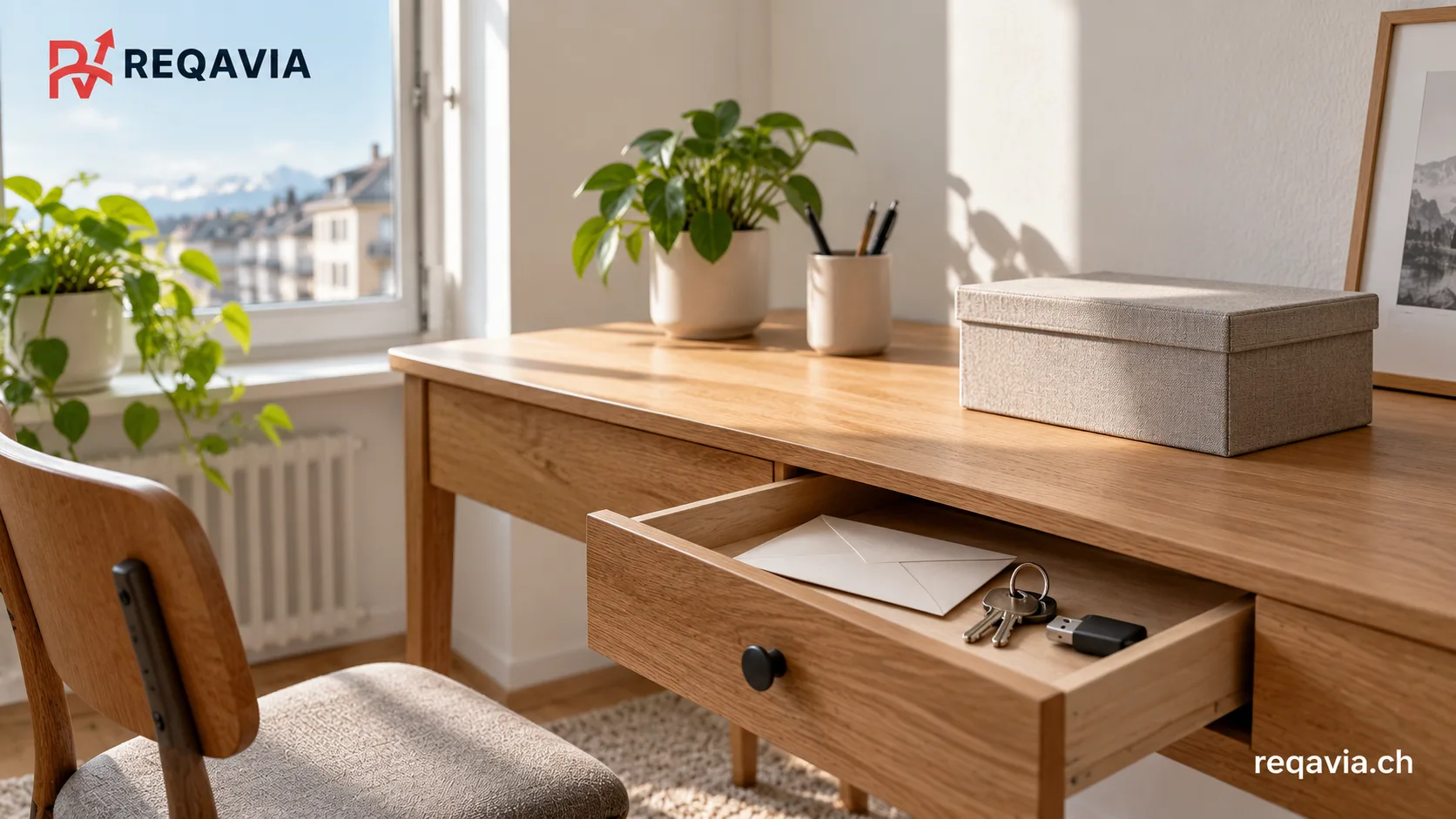
An empty desktop can hide a drawer containing keys, an envelope or a memory stick. A storage bench or bed base can still hold things after the room appears cleared. Before authorising collection, check the contents separately from the furniture’s size and carrying route. Give each piece a clear status: checked and ready, or waiting for its owner. This lets the collection team work from an actual decision.
1. Decide who checks and who can release the furniture
Make a short list of the pieces due to leave, using names that everyone recognises, such as “small desk by the bedroom window”. Ask the person who uses each item to check it. If you are arranging removal for someone else, agree what you may open and who will decide about anything found. Arranging a collection should not become an unagreed search through another person’s belongings.
Set aside a private box or bag for papers, keys and small devices. It should stay with the responsible person, away from anything labelled for removal. The collection crew does not need to read documents or decide whether an unfamiliar object is valuable. If the owner is unavailable, leave that piece pending and tell the company before the visit.
2. Check accessible compartments in a consistent order
Work through one piece at a time: the surface, ordinary drawers, shelves, side pockets and storage sections that you know how to open. Use a light to see accessible corners. Review your own instructions if you are unsure how a compartment works. Do not remove a fixed panel, force a lock, reach blindly into a mechanism or tip heavy furniture just to search underneath.
If a drawer jams, a hinged section will not stay safely open or the furniture is unstable, stop that part of the check. Describe the problem and ask the company whether an appropriate assessment is needed before collection. Record the unchecked section explicitly; “mostly empty” leaves too much room for misunderstanding. You can still prepare the other furniture that has been checked.
3. Separate personal contents from the furniture’s fittings
Keep shelf supports, removable shelves, the furniture’s own lock key and assembly instructions with the correct piece. Count loose parts and put them in an identified container. Agree how the container will travel so it cannot be mistaken for household rubbish. Tell a reuse recipient about anything missing instead of describing an incomplete item as complete.
[The Federal Office for the Environment](https://www.bafu.admin.ch/de/kreislaufwirtschaft) identifies reuse as one way to extend a product’s life. Keeping the right fittings together is a practical preparation step; it does not guarantee that a recipient will accept the furniture.
4. Make the final check match the collection time
Once checked, mark the item temporarily in a way that will not damage its surface, or mark its entry on your list. Tell everyone helping what the mark means. If somebody puts a charger or papers back in the drawer, change the status until it is checked again. A short final check should focus on pieces that have returned to use.
For example, a desk checked the previous evening may need its surface and working drawer checked again on collection morning. If money, a private envelope or an unidentified item appears, pause that piece and contact the owner. Keep the discovery private and agree where it will wait. Do not let a tight departure time decide its destination.
5. Give the company a precise collection request
Describe the furniture, approximate dimensions, floor, lift availability and any narrow passage. State which pieces are cleared, which compartments remain unchecked and who can make the final decision. Clarify whether emptying, dismantling and carrying are included, and what should happen if something is discovered during the work.
You can submit a disposal request through REQAVIA using this description. REQAVIA is an intermediary; you agree the scope, price and execution directly with the company. If photographs would clarify a compartment or access problem, share them privately with the company during coordination. Keep personal papers out of those photographs.