
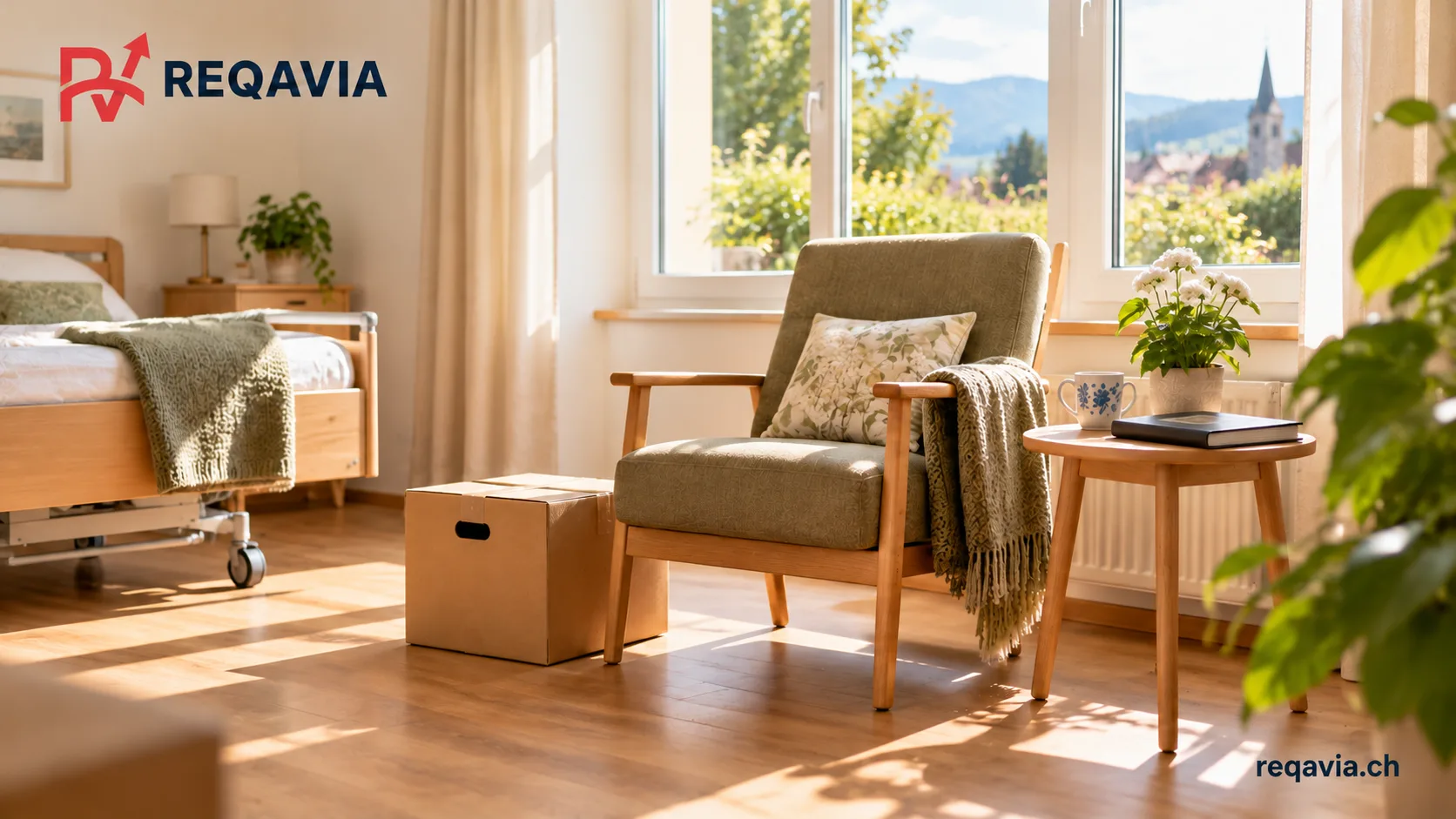
Choose furniture for a move into a care home only after confirming the actual allocated room and what can be added to it. Photographs of a sample room are not enough. Start with the future resident's wishes and have the home confirm the specific selection. The moving company can then work to a clear brief instead of deciding what to do with unsuitable pieces on arrival.
1. Get information about the allocated room
Ask your contact at the home for a current plan or an opportunity to check the relevant measurements. Record existing furniture, available positions, doors and planned routes through the room. Ask which equipment must remain and what space the responsible team needs kept available for using the room. Do not infer care requirements from a drawing.
Measure the width, depth and height of selected furniture, including open doors and extending parts. Check the intended positions with the home. For transport, the company also needs actual access details, door openings and information about any usable lift. A piece may fit the room while still being difficult to deliver to it.
2. Bring personal choices and the home's agreement together
Discuss which belongings matter to the person moving in and which they want to use. Where needed, involve the person responsible for helping them with decisions. A familiar photograph or small table may matter more than a large wardrobe; the selection should not simply follow the size of the previous home.
Present a specific list to the care home. Ask about the conditions for furniture, lamps, other electrical items and personal textiles you intend to bring. Resolve open questions before loading. Keep the response for this particular room: another home's arrangements are not confirmation for this move.
3. Separate arrival essentials from the rest of the home
Prepare a small group of personal items that should be available immediately on arrival. Agree who brings them and who receives them. Personal documents and confidential information stay with the resident or an agreed trusted person rather than disappearing into a furniture box. Delivering the entire contents of the former home is not a useful substitute for an unfinished selection.
- To the room: confirmed furniture and clearly allocated packages.
- With the resident or an agreed trusted person: arrival essentials and confidential documents.
- To other places: separately agreed moves or temporary arrangements.
Give every box a destination. “Books” is not enough if some are going to the care home and others to a relative. Clearing the former property or arranging further deliveries needs a separate agreed scope; it does not follow automatically from the move into the room.
4. Coordinate delivery with the home and the company
Confirm the delivery window, correct entrance, unloading position, lift arrangements and person who will guide the crew to the room. Ask whether using the route or facilities requires particular arrangements. Pass these practical details to the company and agree whom it contacts if delayed. A telephone number for someone who is absent will be of little help at the entrance.
Compare quotations for the same list, including necessary dismantling, packing, assembly and placement. Record who removes packaging and what happens if access unexpectedly becomes unavailable or an item is not accepted. Ask about time and price implications instead of assuming a second journey or temporary storage is included.
5. Check the handover in the room
Review the delivered pieces and their agreed positions with the responsible person. Do not alter or disconnect care equipment to create space; those matters belong with the home's authorised team. If a piece cannot be placed after all, use the agreed alternative and identify someone responsible for following it up. Do not leave belongings in a corridor without agreement.
Keep the furniture request focused
In your REQAVIA text request, describe the furniture move, number and dimensions of pieces, collection address, care-home address, access and agreed date. The company does not need health records for these details. Share useful photographs directly and privately with it. REQAVIA acts as an intermediary; agree the price, scope and execution directly with the company. Arrange personal support and care with the people responsible for those services.