
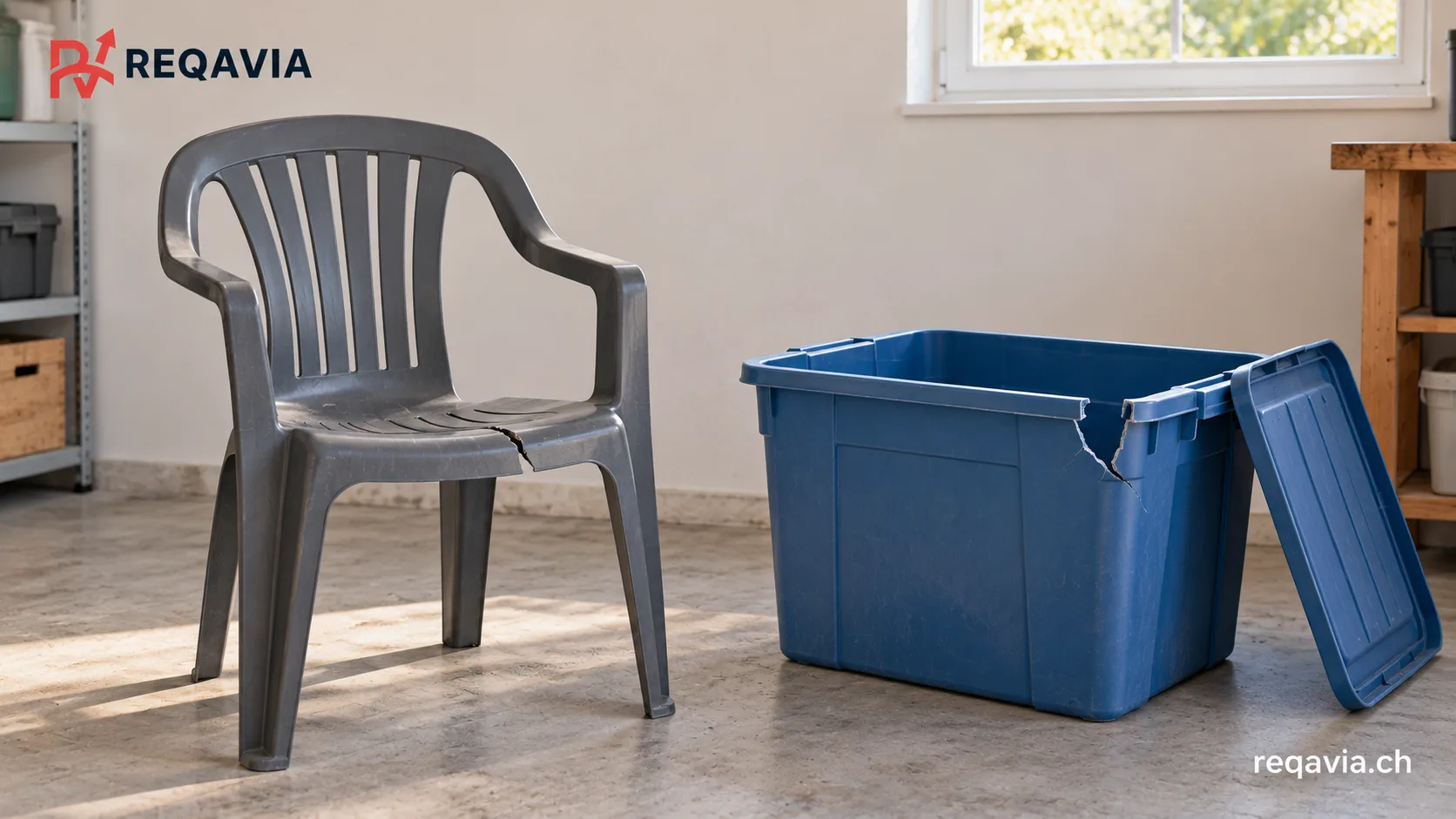
A broken plastic chair or large storage box needs an agreed disposal route, not a guess based on the symbol underneath. Start with the complete object: what it is, how large it is, whether it has sharp damage and what other materials are attached. A material marking can help describe it, but does not confirm that your chosen collection accepts it.
Keep the object separate from household packaging
Do not put a chair, crate or large plastic panel into a packaging collection simply because a similar marking appears on a bottle. The [Federal Office for the Environment](https://www.bafu.admin.ch/de/kunststoffe) describes several household plastic collection channels, including bottle collections and mixed collections. Ask which route accepts your actual product before adding it to a bag or load.
In its own [bulky-waste guidance](https://www.stadt-zuerich.ch/sperrgut), the City of Zurich lists plastic among the examples. This is useful for checking an item in Zurich; it does not establish acceptance in another municipality. Nor does it mean every collection point accepts every plastic object in its present condition.
Decide whether reuse is still a realistic option
For an intact item you no longer need, identify a recipient and confirm the condition they will accept, the handover date and who will carry it. Keep this group apart from the disposal load until that arrangement is confirmed. If nobody has agreed to take it, leave it on your list rather than assuming it has already found a new use.
Describe cracks, missing feet, a failing lid or any damage that affects the intended use. Do not test a cracked chair by sitting on it or present it as ready for use without disclosing the problem. If repair is being considered, have stability assessed by someone competent before further use. Reuse should be a considered decision, not a way to pass on an unknown problem.
Prepare a short record before contacting the collection service
Record the item type, quantity and approximate length, width and height. Note whether it is one rigid piece or has parts that can be removed according to its instructions. Mention metal frames, fabric, wheels or an electrical component. Identify any battery-powered product as a whole product; do not classify its plastic casing separately or dismantle unknown components to make it fit a collection.
For a storage box, say whether it is empty and what it previously held if residues or contamination remain. Do not hide unknown contents under the description “empty plastic”. Take a few private photos showing the whole item, damage and visible mixed parts if these will help a later assessment. Photograph markings only when accessible; turning over a heavy or unstable item is not necessary to start an enquiry.
Confirm acceptance before changing the size
Ask your municipality or its designated collection point about this description: which destination is appropriate, whether the current size is accepted, how damaged edges should be presented and whether a collection appointment is available. Check any quantity limits, access conditions and fees for your own delivery. If a company will deliver for you, ask what confirmation or information it needs.
Do not cut, smash, burn or heat the object to identify the plastic or force it into a smaller container. Reducing its size does not answer whether the material belongs in that collection. If handling requires disassembly or exposes sharp edges, agree the method with the receiving service or company before work starts. Keep the damaged item out of use while arrangements are pending.
Make the collection request specific
State the floor, lift, route to the vehicle and whether the item is indoors, in a cellar or on a balcony. List the other objects to be removed rather than referring to “some plastic”. Compare whether carrying, agreed dismantling, transport and disposal are included. Clarify the destination and what happens if the receiving site does not accept an item; arranging a vehicle alone does not settle those questions.
For a disposal request through REQAVIA, provide this text description and the preferred timing. Any useful photos can be shared later directly and privately with the company. REQAVIA is an intermediary: the agreement, price and work are arranged with that company. Keep your final item list so you can check what was collected and what still needs a solution.