
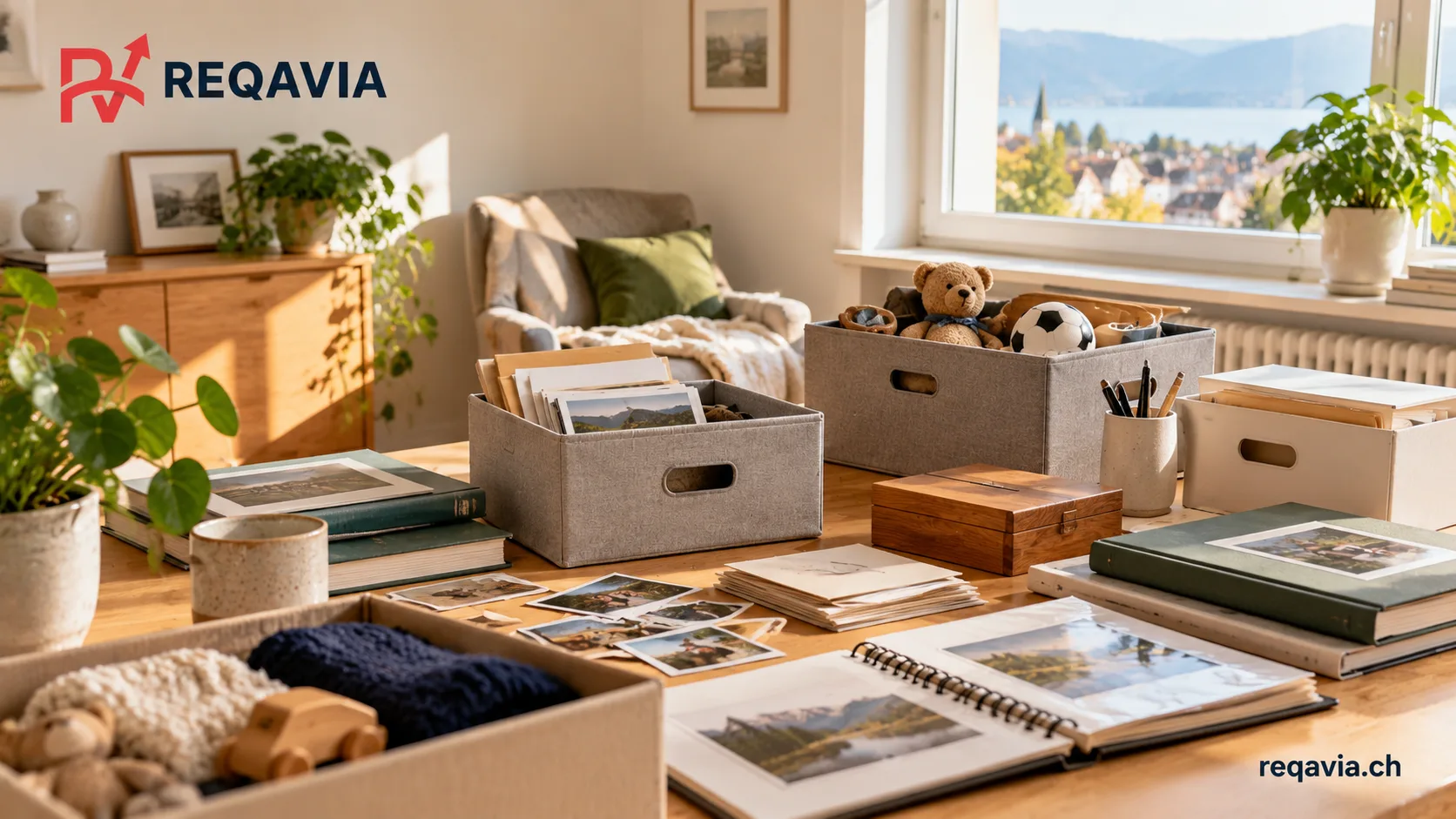
Before parents move, belongings left by adult children need their own decisions. University books, sports equipment and keepsake boxes can quietly become part of the new household’s load. Start with a list for each person, then ask what they will collect and what other arrangement they approve. Do not make one family decision for everyone.
Identify groups without opening private material
Give each box or group a simple reference. Record where it is, its approximate size and an existing description, such as “two closed study boxes on the spare-room shelf”. You can identify a group without opening correspondence, reading documents or sharing photographs of personal contents in a large family chat.
If sorting requires the owner’s involvement, arrange a visit or agree a limited way for someone else to help. Clarify which containers may be opened and what decisions still require a reply. Where ownership is unclear, record the uncertainty. A disagreement about who can decide should be resolved separately; the moving crew cannot settle it.
Ask for a decision that can be carried out
Send each person their own list and a proposed reply date that leaves time before the move. Offer practical choices: collection, delivery to a confirmed address or another specifically approved arrangement. For each choice, name who organises it and when. “I will take it someday” is not a transport plan.
Follow up if no answer arrives. Do not treat silence as permission to discard things or as agreement to store them indefinitely in the parents’ new home. If a temporary arrangement becomes necessary, discuss its location, duration and later collection explicitly. Obtain the receiving person’s agreement before assigning boxes to a sibling’s home.
Compare collection and multiple deliveries
A separate collection may suit someone nearby who can attend. A moving journey with additional stops may suit confirmed addresses on an agreed route. Separate deliveries may be easier when recipients have incompatible availability. Compare the whole arrangement, including access, timing, handling and the company’s proposed charges, without assuming one option is always cheaper.
Give the company a destination list showing each group, quantity, recipient and access details. Mention floors, lifts and any bulky item. Ask which stops it can provide and have the accepted route included in the quote. Keep an address outside the final plan until someone has confirmed they can receive the actual quantity at the proposed time.
Keep the handovers traceable
Use distinct references even where family members have similar names. Keep the private reference-to-recipient list separately rather than displaying contact details on every carton. Mark which groups travel with the parents and which take another route, so an enthusiastic helper does not combine them again.
At collection or delivery, ask the recipient to confirm the number of containers received. Update the list immediately and check what remains in the old rooms before handing over keys. Record any exception with a responsible person and next action; do not assume a missing box must have reached another relative.
For a moving request through REQAVIA, describe the confirmed load, number of destinations, access and collection arrangements in text. Family history and private contents are unnecessary. Share useful photographs privately with the company later if needed. REQAVIA is an intermediary; you agree the route, price and execution directly with the moving company.