
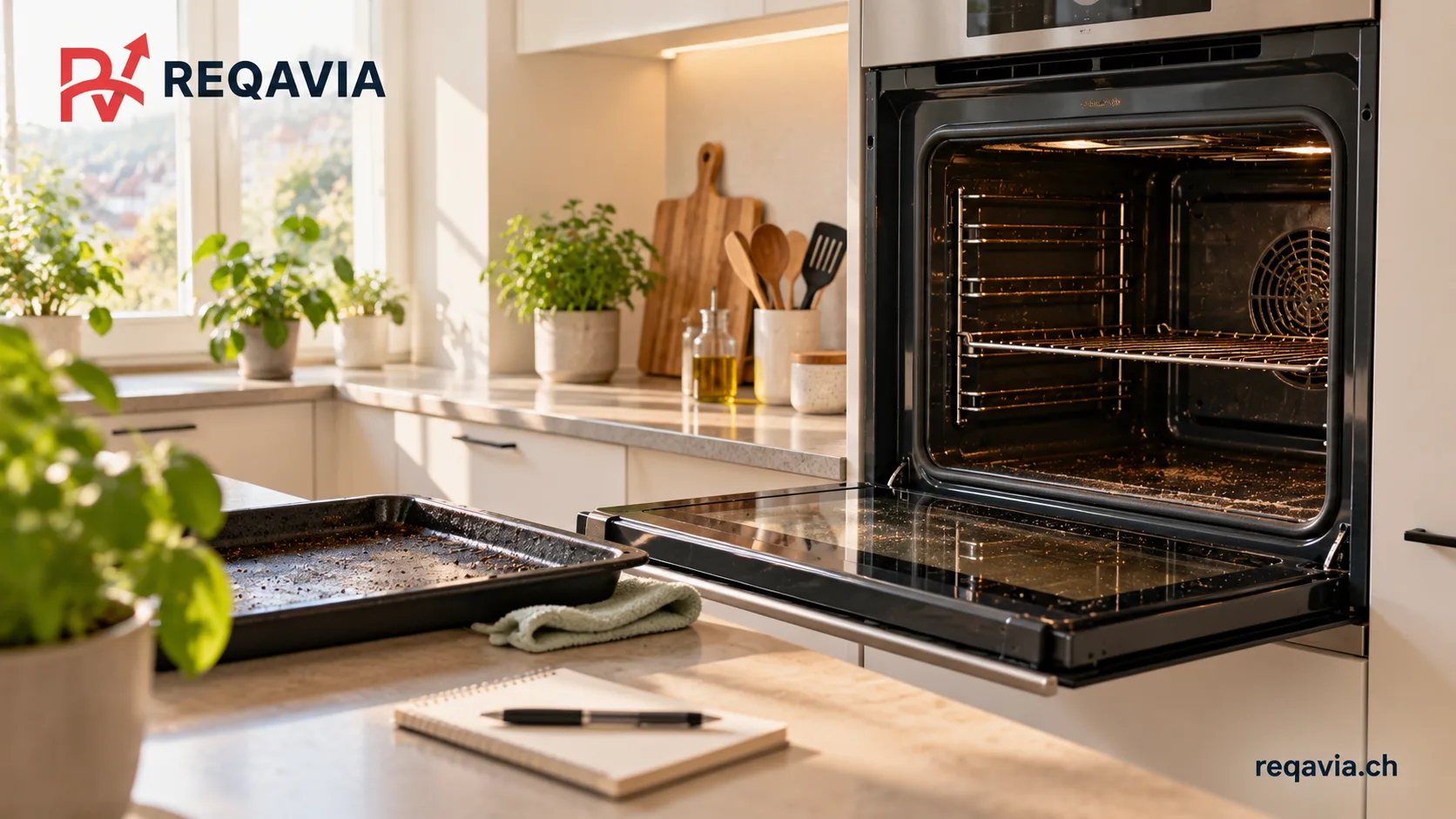
An extra request during a cleaning visit needs a clear decision before it becomes work. If you ask for the oven as well, the cleaner may understand it as a new priority while you expect an addition within the same time and price. Describe the task, ask what changes and confirm whether the team can accept it under the company’s arrangements.
Say exactly what “the oven” includes
Identify the parts you want addressed: accessible interior surfaces, the door area, racks or separate baking trays. Do not assume that one phrase includes every removable component or dismantling. Tell the company about known damage, unfamiliar surfaces or functions, and make the appliance instructions you already hold available for assessment.
Ask what preparation you must complete and what the team will do. Confirm when the appliance is suitable for the proposed work and which method and supplies the company accepts. A brief opening in the schedule is not a reason to invent a cleaning recipe, start an unplanned appliance cycle or remove unknown parts. If suitability or equipment is unclear, leave the task pending until it can be assessed.
Check the effect on this particular visit
Ask for the additional time, any materials or equipment and how the extra work would be charged. Establish who at the company can approve a change. The cleaner may have a later appointment and be unable to extend the visit even if willing to help. General verbal agreement does not settle the consequences for the rest of the task list.
With a total-price offer, ask explicitly whether the oven was already included or requires a variation. With hourly work, clarify whether the proposed time is for one person or the team and how it affects the agreed limit. Do not assume a small physical area means a small addition to the schedule; request an estimate for the actual condition and scope.
Choose one of three workable arrangements
- Add the agreed work and extend the visit only if the company can confirm the time and charging arrangement.
- Replace a lower-priority task within the available visit and name exactly what will wait.
- Keep the original plan and schedule an assessed oven-cleaning task for another suitable visit.
If you replace a task, choose a real item from the existing list, such as an agreed interior window or an unused room. Do not later describe it as forgotten. Necessary preparation and safe working arrangements are not optional tasks to remove in exchange for more cleaning. If the team cannot propose a suitable method, a priority change does not solve that problem.
Confirm the decision in a short message
Record the added task and parts, the accepted charging basis, expected time, any ceiling or notification point and the original work postponed. Ask the company’s authorised contact to confirm where its process requires this. Keep the message with the original offer so both parties review the same updated list.
SECO identifies clarity and comparability as objectives of price indication. In practice, ask for an amount or understandable calculation before acceptance, rather than relying on “not much extra”. That does not establish a uniform legal rule for every cleaning contract; the actual change still needs agreement with the company.
SECO: price indication (German)
If the task reveals a condition outside the accepted addition, pause that part and ask for a new explanation before further work. An agreement to clean an accessible surface is not an open instruction to dismantle or repair the appliance. Clarify the appropriate next contact if the problem requires specialist assessment.
Use the updated list at the end
Review the addition alongside the work retained from the original visit. Note what was completed, what awaits another appointment and what remains unresolved. Keep the confirmed change for checking the invoice. Repeated requests for the same extra task should become part of planning the next visit from the outset.
For a future REQAVIA cleaning request, include the oven scope and other priorities in the text description. REQAVIA acts as an intermediary; the company agrees additions, price and execution directly with you. If photographs help it assess the condition, share them directly and privately during coordination.